Showing posts with label Upper Peninsula. Show all posts

Tuesday, June 10, 2014

Michigan DNR seeks partners in new hunting and habitat program

The Department of Natural Resources is looking for partners in a new hunting and wildlife management program called the Grouse Enhanced Management System (GEMS), in
which timber is intensively managed to improve ruffed grouse habitat and hunting opportunities. Seven GEMS are being formed in both the Upper Peninsula and northern Lower Peninsula for a fall 2014 hunting season debut.

GEMS will be managed primarily for aspen and harvested on a shortened rotation. Normally aspen is cut every 60 years, but within the GEMS, aspen is intended to be young and thick – the best habitat for grouse and woodcock – and will be cut about every 40 years. Each GEMS area will contain gated roads, which will allow hunters to meander among different-aged aspen stands without concern for vehicle traffic.

Each GEMS area will have a parking lot, an information station and signs, as well as local community partners, and each will:
  • Provide unique, walk-in hunting opportunities.
  • Promote hunter recruitment and retention.
  • Expand local economies.
  • Accelerate timber harvest opportunities.
Groups or organizations interested in partnering with GEMS can contact Katie Keen at 231-775-9727.
Enhanced by Zemanta

Friday, December 20, 2013

Michigan DNR finds 2013 firearm deer hunters faced challenges, but persistence pays off

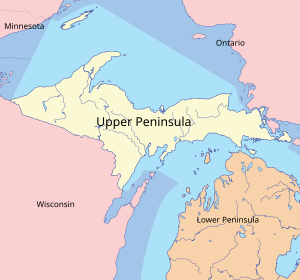
English: Michigan's Upper Peninsula
Michigan's Upper Peninsula (Photo credit: Wikipedia)
Michigan’s 2013 firearm deer season wrapped up last weekend, and challenging conditions and lower deer numbers in some areas have likely led to fewer deer being taken this year, the Department of Natural Resources announced today. Firearm season deer check-station activity declined in all regions of the state compared to 2012.
Each year the DNR generates preliminary estimates of the firearm deer harvest shortly after the season closes on Nov. 30. Those estimates are replaced by a rigorous assessment of harvest and participation over all deer seasons using an annual hunter mail survey.
The 2013 firearm deer season harvest appears to have decreased in all regions this year, but particularly in the Upper Peninsula and southern Lower Peninsula. Experiences can differ widely within regions; DNR biologists estimate the harvest (compared to 2012) was down perhaps 15 to 20 percent across the Upper Peninsula, decreased only slightly in the northern Lower Peninsula, and declined perhaps 10 percent in the southern Lower Peninsula.
“Deer populations in the Upper Peninsula are feeling the effects of late and heavy snowfall last winter, and in some areas of southern Michigan are still recovering from an extensive outbreak of epizootic hemorrhagic disease two summers ago,” said Brent Rudolph, DNR Wildlife Division Deer and Elk Program leader.
“A new antler point restriction in 12 counties of the northern Lower Peninsula has added protection for young bucks,” noted Ashley Autenrieth, Wildlife Division deer biologist for the northern regions, “so we expected buck harvest in that region to be lower for at least a year.”
Severe weather conditions, warmer-than-average temperatures and concentrations of standing corn that provide secure cover for deer also contributed to adverse hunting conditions in some locations. A recent national survey highlighted that persistence pays off, particularly when conditions are not ideal. Successful deer hunters hunted an average of 18 days, which is longer than the entire duration of Michigan’s firearm season.
Rudolph stressed the importance of cooperation with Michigan’s hunter harvest survey, which he called “a vital tool for Michigan’s deer program, and an important way in which data provided by hunters contributes to our information base.”
Hunters that do not receive a survey in the mail but wish to provide their hunting and harvest information may visitwww.michigan.gov/deer and select the Deer Harvest Reporting Form link. Hunters should only provide this information once they have completed all of their 2013 hunting activities, including seasons open through as late as Jan. 1, 2014.
For more information about hunting opportunities or deer management in Michigan, visit www.michigan.gov/hunting orwww.michigan.gov/deer.

Friday, February 22, 2013

Michigan DNR now taking applications for deer habitat improvement grants

English: Michigan's Upper Peninsula
 (Photo credit: Wikipedia)

Sportsmen's clubs and other non-government organizations interested in deer habitat improvement on private land in the Upper Peninsula are encouraged to apply for Deer Habitat Improvement Partnership Initiative grants now through Sunday, March 31, the Michigan Department of Natural Resources announced today.

A total of $50,000 will be available in 2013 through the competitive DHIPI grant process. Project proposals from organizations with a formal mission to promote wildlife conservation and/or hunting seeking between $2,000 and $10,000 in funding are eligible for consideration.

Now in its fifth year, the DHIPI grant program is designed to attract and support proposals from non-government organizations interested in improving deer habitat on non-state-owned land in the Upper Peninsula, including private property and Commercial Forest Act-enrolled land. (Projects that provide foot access to the public are more likely to be successful.)

"There are three primary goals applicants should strive to meet," said DNR private lands wildlife biologist Bill Scullon. "The projects should produce tangible deer habitat improvements, build long-term partnerships with the DNR, and identify ways to showcase the benefits to the public."

Scullon said he encourages representatives of interested organizations to contact their local DNR wildlife biologist for help in developing competitive project proposals.

In 2012, six projects were funded in 11 Upper Peninsula counties, improving deer habitat on a total of 691 acres of private industrial forest and federal land.

The projects completed in 2012 ranged from planting red oak seedlings in Mackinac County to creating or improving wildlife openings in Delta, Menominee and Ontonagon counties. In addition to improving deer habitat, successful projects in Delta and Iron counties also provided improved access for youth and disabled hunters.

The DHIPI grant application packet can be accessed online by visiting www.michigan.gov/dnr-grants and clicking on the "Deer Habitat Improvement Partnership Initiative" link. Application deadline is Sunday, March 31; successful applicants will be notified by Monday, April 15. For more information, contact Bill Scullon at 906-563-9247 orscullonh@michigan.gov.

DHIPI grants are funded by the state's Deer Range Improvement Program (DRIP). Created by legislation in 1971, the DRIP fund is supported by a $1.50 allocation from each deer license sold (except for senior licenses), which equals $2.2 to $2.8 million in funding annually. This restricted funding is for the enhancement, maintenance, and acquisition of deer habitat statewide.

Thursday, February 21, 2013

Growing number of Michigan deer hunters give crossbows a try


Although the overall number of hunters in Michigan has been on a slight decline, the Department of Natural Resources reports that a recent deer hunter survey shows growth in one method of deer hunting - crossbows.
Crossbow hunter afield in tree standIn the past, only hunters with disabilities had the option to hunt with a crossbow. Beginning in 2009, crossbows were allowed in most areas of Michigan during the archery deer season in an attempt to expand hunting opportunities, retain existing hunters and recruit new hunters. Crossbow hunters were required to obtain a free crossbow stamp to determine the number of hunters who took advantage of the new method.
In 2009, the opportunity to use a crossbow was extended only to hunters 50 years of age or older in the Upper Peninsula and northern Lower Peninsula, while hunters of any age could use crossbows in the southern Lower Peninsula. In 2010 the age restriction was eliminated statewide.
The archery deer season runs statewide on public and private land and is divided into early and late season segments (Oct. 1 through Nov. 14 and Dec. 1 through Jan. 1). In the Upper Peninsula, crossbows are only allowed to be used in the early archery season.
"We have discovered that in 2011, 25 percent of the crossbow users had not hunted in the archery season in previous years," said DNR Deer and Elk Program Leader Brent Rudolph. "These hunters were newly recruited or drawn back to the sport of archery hunting."
The opinion survey also revealed that hunting with a crossbow met most or all of the archers' expectations, and nearly all crossbow hunters planned to use crossbows again in the future.
The number of hunters who obtained the free crossbow stamp by year is:
  • 2009 - 45,692
  • 2010 - 64,340
  • 2011 - 74,120
  • 2012 - 88,565
Although the expanded opportunity increased the number of archery hunters, the amount of deer harvested overall during the archery season did not increase each year. Harvest of deer over all seasons combined declined or was similar to previous years.
"With close to 800,000 hunters in Michigan annually, we know deer hunting is a strong tradition held by many," said DNR Wildlife Division Chief Russ Mason. "The expanded crossbow regulations met all the expectations we hoped for. Our primary goal is to do a good job managing the deer herd, and if new hunting opportunities can also be made, that's a good thing."
To view the entire Crossbow Deer Hunter Survey report, go to www.michigan.gov/hunting and click on Wildlife Surveys and Reports in the left-hand navigation bar.
Hunters are reminded to fill out their 2012 deer harvest survey by going online tohttps://secure1.state.mi.us/deersurvey.

Monday, January 28, 2013

DNR seeks public's help in mapping Upper Peninsula winter deer yards

Deer in Tenafly, NJ
 (Photo credit: Wikipedia)

As part of an initiative to update maps of deer wintering complexes (also known as "deer yards") in the Upper Peninsula, the Michigan Department of Natural Resources is seeking help from the public to identify locations where deer are concentrating this winter.

During the snowy winter months, deer in some areas of the Upper Peninsula traditionally migrate to areas that possess an abundance of conifer trees, especially cedar and hemlock. Cedar and hemlock provide an excellent source of food, while their branches intercept snow and serve to shelter deer from deep snowfall.

The reduced snow depth in deer yards results in deer expending less energy moving between feeding and shelter areas. In addition, the conifer cover acts to insulate the deer by reducing wind movement and providing higher nighttime temperatures. Because deer have a more restricted and lower quality diet in the winter compared to other times of the year, it is imperative that they find ways to conserve energy stores.

“We are updating our maps of where deer are spending their time during the winter. This is an effort to ensure wildlife biologists and foresters have the best available information when making decisions about conservation and sustainable management of deer wintering complexes,” said DNR wildlife biologist Bob Doepker.

DNR field staff will be verifying the presence of deer and clarifying the deer wintering complex boundaries during the winter months. Assistance from the public in providing the locations where deer concentrate in the winter will dramatically increase the number of locations that can be checked by field staff to refine deer wintering complex boundaries.

Deer observation forms can be downloaded from the DNR’s website by going towww.michigan.gov/deer and clicking on the “Upper Peninsula Winter Deer Observations” link. Hardcopies are also available at DNR offices in the Upper Peninsula (for office locations, visitwww.michigan.gov/contactdnr).

Completed observation forms should be returned to: Michigan DNR, Wildlife Division, Norway Field Office, 520 W. US Hwy. 2, Norway, MI 49870.

For more information about the project, contact Bob Doepker or Steve Carson at 906-563-9247.

Wednesday, February 8, 2012

Michigan: Northern Lower Regional Deer Advisory Team Will Meet For the First Time Feb. 11

English: White-tailed deer
Image via Wikipedia

The inaugural meeting of the Northern Lower Regional Deer Advisory Team (NLRDAT) is set for Saturday, Feb. 11. The meeting will be held at the Ramada Inn Conference Center, 2650 I-75 Business Loop, Grayling, from 9 a.m. to 3 p.m.

With the approval of the Michigan Deer Management Plan on May 6, 2010, the Department of Natural Resources (DNR) committed to establishing Regional Deer Advisory Teams (RDAT) for each Michigan region. Each RDAT corresponds to the boundaries of the DNR Hunting and Trapping Zones ? Zone 1 being the Upper Peninsula, Zone 2 the Northern Lower Peninsula, and Zone 3 the Southern Lower Peninsula.

The NLRDAT will serve as an advisory team to the DNR on deer management in the Northern Lower Peninsula. The goal of the team is to serve as a conduit between the public and the DNR to better understand the major concerns surrounding white-tailed deer.

"This is a great opportunity to engage members of the public about deer-related issues," said DNR Deer Biologist Ashley Hippler. "We are looking forward to working closely with this group."

The NLRDAT is made up entirely of volunteers who have been appointed by the Natural Resources Commission and the DNR, for either two or three years; team members will attend local open houses, which will be public meetings for sharing information and gathering public input in their region.
"The Regional Deer Advisory Teams are a critical connection between the public and the DNR," said DNR Wildlife Division Chief Russ Mason. "Understanding the public's views on deer management is the only way we can have successful deer management in Michigan."

Members of the public are welcome to attend as observers, although the meeting is not open for public comment. If time permits, the NLRDAT will take questions and comments from the public.
If you have topics you would like the NLRDAT to discuss, email Ashley Hippler at hipplera@michigan.gov, or share your comments at http://deer.fw.msu.edu/involved/nlteam.php.

The Michigan Department of Natural Resources is committed to the conservation, protection, management, use and enjoyment of the state's natural and cultural resources for current and future generations. For more information, go towww.michigan.gov/dnr.

Tuesday, November 1, 2011

Michigan Deer Hunters: Don't Miss 'Ask the DNR' Nov. 3 on WNMU Public Television

Michigan's Upper PeninsulaImage via Wikipedia
"Ask the DNR" returns to WNMU-TV Channel 13 in the Upper Peninsula Thursday, Nov. 3, at 8 p.m. The entire hour will be dedicated to questions about deer hunting in the Upper Peninsula and hunting regulations.

This special deer hunting episode of "Ask the DNR" will feature a panel of Department of Natural Resources employees taking questions from viewers who call in during the live show to 800-227-9668, or submit email questions before Thursday, Nov. 3, to DNR Communications Representative Debbie Munson Badini atmunsonbadinid@michigan.gov.

Questions are answered live on the show; any questions not answered before the end of the episode will be answered by phone call to the viewer.

Thursday's show will feature Jared Ferguson, conservation officer from Delta County; Doug Hermanson, conservation officer from Baraga County; and Terry McFadden, wildlife biologist from Marquette. The episode is sponsored by the U.P. Whitetails of Marquette County.

"Ask the DNR" is produced five times a year on WNMU-TV 13, the public television station in Marquette. It is aired live on public television stations throughout the Upper Peninsula and northeastern Wisconsin and typically replays the following day at noon. Please consult local television listings to confirm replay times for the program.

The Michigan Department of Natural Resources is committed to the conservation, protection, management, use and enjoyment of the state's natural and cultural resources for current and future generations. For more information, go towww.michigan.gov/dnr.

Thursday, July 14, 2011

Antlerless Deer License Applications Go on Sale July 15

Michigan's Upper PeninsulaImage via Wikipedia
Applications for antlerless deer licenses go on sale Friday, July 15, at all license agents or online at www.michigan.gov/huntdrawings. Private land licenses for southern Michigan and Deer Management Unit (DMU) 487 in the Northeastern Lower Peninsula are sold without application, however, and may be purchased beginning Sept. 6 at 10 a.m.
In all, 756,200 antlerless deer licenses will be available in 2011, a decrease from 776,500 available last year. Statewide, public land licenses increased slightly while private land licenses decreased.
Hunters will find more antlerless licenses available in the Upper Peninsula. In 2011, 16 Upper Peninsula DMUs will not have antlerless deer licenses available, compared to 17 DMUs in 2010.
In the Northern Lower Peninsula, antlerless permits have decreased somewhat, largely due to fewer licenses available on private land. Six DMUs will not offer antlerless licenses, compared to five in 2010. All private land licenses for DMU 487 - which includes Alpena, Alcona, Iosco, Montmorency, Oscoda, and Presque Isle counties - may be used throughout the DMU. As another option for taking antlerless deer only within DMU 487, hunters in the unit may use a firearm or combination license for antlerless deer within the Nov. 15-30 firearm season or the Dec. 9-18 muzzleloader season.
In southern Michigan, the number of available antlerless licenses has been decreased and Kent County (DMU 041) is now part of the larger multi-county DMU 486. All private-land licenses for DMU 486 - which includes all but four counties in southern Michigan - may be used within any county in the DMU.
Applications, which remain on sale through Aug. 15, are $4. Hunters may apply for just one antlerless license - public land or private land. After the drawing, remaining antlerless licenses may be purchased beginning Sept. 6 at 10 a.m. Licenses will be sold until the quotas are met. The season purchase limit for antlerless deer licenses has increased to five statewide, except for DMU 486 and DMU 487 which have no season limit.
Baiting and feeding in limited quantities is now allowed statewide, except for DMU 487, where a total ban remains in effect due to the presence of bovine tuberculosis among deer in that region. Baiting is allowed from Oct. 1 to Jan. 1. Hunters may place no more than two gallons of bait scattered across a minimum 10-foot by 10-foot area. The DNR requests that hunters not place bait repeatedly at the same point on the ground and only place bait out when actively hunting. This may minimize the chance of direct and indirect exposure of deer to any diseases that may be present.
The Michigan Department of Natural Resources is committed to the conservation, protection, management, use and enjoyment of the state's natural and cultural resources for current and future generations. For more information, go towww.michigan.gov/dnr.

Enhanced by Zemanta

Tuesday, July 12, 2011

Michigan: DNR Western Upper Peninsula Citizens' Advisory Council to Meet July 18 in Ontonagon County

July 11, 2011
The Department of Natural Resources' Western Upper Peninsula Citizens' Advisory Council (CAC) will meet Monday, July 18, at the Porcupine Mountains Wilderness State Park Visitor Center, located at 33303 Headquarters Rd., in Ontonagon.
Beginning at 5:30 p.m. Eastern Time, DNR staff will present division reports and answer questions from council members and the public, followed by the council meeting from 6 to 8 p.m. Eastern Time.
Agenda items include:
  • Copperwood Project special presentation
  • Wildlife Division expenses and revenue
  • Senate Bill 248 (state land ownership cap)
Additional updates will be provided on the following topics:
  • Tribal hunting and fishing rights
  • ORV trail signage
  • Event permit requirements
  • Fisheries Division procedure for regulation changes
CAC meetings are open to the public. The requirement for a Recreation Passport to enter the state park will be waived for meeting participants and attendees.
The Eastern Upper Peninsula and Western Upper Peninsula CACs are designed to advise the DNR on regional programs and policies; identify areas in which the department can be more effective and responsive; and offer insight and guidance from members' own experiences and constituencies. The council members represent a wide variety of natural resource and recreation stakeholders and interest groups. Agenda items are set by the council members, and council recommendations are forwarded to the DNR for consideration.
If you would like to be considered as a future CAC member, please fill out the nomination form found on the DNR website at www.michigan.gov/upcac. For more information, contact DNR Upper Peninsula Regional Director Stacy Welling at 906-228-6561.
The Michigan Department of Natural Resources is committed to the conservation, protection, management, use and enjoyment of the state's natural and cultural resources for current and future generations. For more information, go towww.michigan.gov/dnr.

Enhanced by Zemanta