Showing posts with label Tree stand. Show all posts

Wednesday, September 30, 2015

HUNTERS ENCOURAGED TO FOCUS ON TREE STAND SAFETY

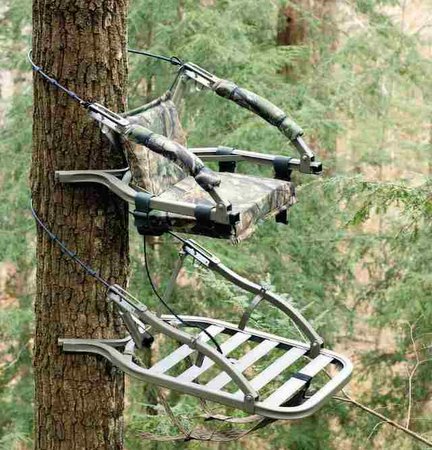
English: Tree Stand

Tree stand accidents can happen to deer hunters of all skill levels and result in serious injury or death. In Iowa last year, four hunters fell from tree stands, all resulting in personal injury.
Since August is traditionally a busy time for deer hunters who are preparing for the upcoming hunting season; it has been chosen as Tree Stand Safety Awareness Month.
To help prevent injuries, the Iowa DNR is offering the following safety tips:
     Always wear a safety harness, also known as a fall arrest system (FAS), when you are in a tree stand, as well as when climbing into or out of a tree stand.
     A safety strap should be attached to the tree to prevent you from falling more than 12 inches.
     Always inspect the safety harness for signs of wear or damage before each use.
     Follow all manufactures’ instructions for use of a safety harness and stand.
     Follow the three point rule of tree stand safety.  Always have three points of contact to the steps or ladder before moving.  This could be two arms and one leg holding and stepping on the ladder or one arm and two legs in contact with the ladder before moving.  Be cautious that rain, frost, ice, or snow can cause steps to become extremely slippery.  Check the security of the step before placing your weight on it.
     Always hunt with a plan and if possible a buddy. Before you leave home, let others know your exact hunting location, when you plan to return and who is with you.
     Always carry emergency signal devices such as a cell phone, walkie-talkie, whistle, signal flare, personal locator device and flashlight on your person at all times and within reach even while you are suspended in your FAS. Watch for changing weather conditions. In the event of an accident, remain calm and seek help immediately.
     Always select the proper tree for use with your tree stand. Select a live straight tree that fits within the size limits recommended in your tree stand’s instructions. Do not climb or place a tree stand against a leaning tree.
     Never leave a tree stand installed for more than two weeks since damage could result from changing weather conditions and/or from other factors not obvious with a visual inspection.
     Always use a haul line to pull up your gear and unloaded firearm or bow to your tree stand once you have reached your desired hunting height. Never climb with anything in your hands or on your back. Prior to descending, lower your equipment on the opposite side of the tree.
     Always know your physical limitations. Don’t take chances. Do not climb when using drugs, alcohol or if you’re sick or un-rested. If you start thinking about how high you are, don’t go any higher.

Saturday, October 11, 2014

Michigan conservation officers share tips for safe bowhunting

English: Tree Stand
 (Photo credit: Wikipedia)
Michigan’s bowhunting season opens today, Oct. 1, and Department of Natural Resources conservation officers are sharing tips for a safe bowhunting experience.
“Bowhunting is a popular pastime in Michigan and we want everyone to have a safe and enjoyable hunting season,” said Sgt. Tom Wanless, supervisor of the DNR's hunter education program. “There are some common-sense safety tips every hunter should review before heading to the woods.”
The top safety tips for bowhunting are:
  • Before you go out, inspect equipment, including your tree stand. If anything is worn, frayed, cracked or peeling, replace it or get it fixed. If using a compound bow or crossbow, make sure the cables and pulleys are in good working order.
  • When sharpening broadheads, be careful and take your time.
  • Practice tree-stand safety. Nearly every year, a Michigan hunter is killed or seriously injured because he or she fell out of a tree stand. The DNR recommends using a full-body safety harness to get into and out of your tree stand.
  • If using a tree stand, always use a haul line to raise and lower your gear.
  • Keep arrows in the quiver until you are ready to use them. A common injury is to stab or injure yourself or a hunting companion while carrying arrows in your hand or nocked on your bow.
  • Obtain permission from a landowner before hunting on his or her land, or using their land to access public land.
  • Never take a shot at a deer that is beyond the maximum effective range at which you are comfortable shooting.
  • If you are successful, field dress your deer and cool its meat immediately. Michigan’s unpredictable weather means we sometimes have warm October days. Warm temperatures can cause the meat to spoil quickly.
  • When heading out to the woods, make sure you tell someone reliable where you are going and what time to expect you back. This information is valuable in helping conservation officers or sheriff's deputies to find you if you are lost.
  • Also, think about carrying a cell phone, a compassa flashlight and other small safety items when in the woods

Wednesday, September 24, 2014

TREESTAND SAFETY

English: Tree Stand
 (Photo credit: Wikipedia)
Bow hunters preparing for the upcoming season should check all their gear to make sure it is in proper working order, especially treestands and safety harnesses, before heading to the timber.
“Falls associated with tree stand use are the most common hunting incidents during the bow season,” said Megan Wisecup, hunter education administrator for the Iowa Department of Natural Resources. “Hunters should always wear a safety harness and use caution when climbing.”
Wisecup said there are a number of tips hunters can use to prevent injury when using a treestand.
“Make sure to select a tree that fits the tree stand recommended limits and follow the three point rule of tree stand safety – always have three points of contact to the steps or ladder before moving,” she said.
“That could be two arms and one leg holding and stepping on the ladder or one arm and two legs in contact with the ladder before moving. And remember the elements – the rain, frost, ice or snow can cause steps to become slippery so check the security of the step before placing your weight on it.”
Other safety tips include using a haul line to pull gear and the unloaded firearm or bow to the stand and hunters should never climb with anything in their hands or on their back.  When exiting the stand, use the haul line to lower the gear on the opposite side of the tree.
“Get familiar with the safety harness. Read the instructions for it and for the tree stand itself so you know how to use it properly and know its limitations,” Wisecup said. 
Falls from tree stands are required to be reported to the DNR if a person seeks medical attention for an injury received while entering, exiting or sitting in a stand.
“The basic rules of tree stand safety don’t apply to just bow hunters, but to firearm hunters using an elevated device or stand,” she said.  “We want everyone to be safe out there. The goal at the end of every hunt is to arrive home safely.”

Sunday, September 14, 2014

DNR conservation officers emphasize tree-stand safety as hunters gear up for fall

English: Tree Stand
 (Photo credit: Wikipedia)
Hunting from a tree stand is a popular way for hunters to enjoy their season, but nearly every year a Michigan hunter is seriously injured or killed falling out of a tree stand. Conservation officers at the Department of Natural Resources remind hunters of the top safety tips when it comes to tree stands.

Before a hunt, know your equipment:
  • Read and understand the manufacturer’s instructions and warnings before using a tree stand and harness.
  • Check the stand, straps and chains before you go out for signs of wear and tear or missing parts.
  • Practice at ground level with your tree stand and harness with a friend or family member.
  • Learn how to properly use your harness. The DNR recommends a full-body harness.
  • Waist belts or upper body-only harnesses can cause serious injuries or death in a fall. 
When scouting for a tree:
  • Choose a healthy, straight tree that is the right size to hold you and your stand.
  • Check the tree beforehand for insect nests or animal dens.
  • Avoid using climbing stands on smooth-barked trees, especially during icy or wet weather.
  • Clear debris from the base of the tree to minimize injury from a fall and to ensure a sturdy base if using a ladder stand. 
During your hunt:
  • Tell a reliable person where you are hunting and when you can be expected to return.
  • Wear a full-body harness and make sure it is connected to the tree at all times. If using a ladder stand or climbing sticks, attach the harness before securing the platform to the tree or stepping onto it.
  • Climb higher than your stand and always step down onto your platform.
  • Wear boots with non-slip soles.
  • Never carry equipment when climbing – use a haul line to raise and lower equipment, unloaded firearm or bow. Do not attach the line near the trigger or trigger guard of your firearm.
  • Have emergency equipment – a knife, cellphone, flashlight and/or whistle. 
"DNR conservation officers responding to tree-stand falls see the same mistakes over and over – not using a harness or a haul line,” said Sgt. Tom Wanless, supervisor of the DNR hunter education program. “Nationally, 82 percent of hunters who fall from a tree stand are wearing a harness, but it’s not connected. And 86 percent of tree-stand falls take place during the climb up or down. Harnesses and haul lines save lives.”

For more information about tree stand safety, go to the Treestand Manufacturers Association website at www.tmastands.com. For more information about hunting in Michigan, visit the DNR website at www.michigan.gov/hunting
 

Tuesday, March 18, 2014

IOWA HAS SAFE HUNTING YEAR IN ‘13

English: Iowa Department of Natural Resources logo

With no fatalities, 11 injuries and six cases of property damage, Iowa hunters matched a record low in 2013; continuing a decade long run of safe hunting seasons. That 17-incident year tied 2008, though ’08 did register a gun related fatality. Still, when any incident could result in tragedy, the goal is ‘zero’ across the board.
“We continue seeing a trend of self-inflicted incidents. There were seven this year. That has stayed pretty steady over the last four, five years,” reviews Megan Wisecup, safety education programs coordinator for the Department of Natural Resources. “It gets back to basic firearm handling. Point the muzzle in a safe direction. Keep your finger off the trigger, until ready to shoot. And take an extra minute when crossing obstacles to unload.”
A jacket drawstring….a handgun falling from a truck…thick brush on a creek bank. Each triggered a gun to fire in 2013. Linn, Marion and Floyd counties each recorded two 2013 incidents. The others were spread among 11 central, eastern and north-central counties.
The key to the long term drop can be traced directly to many Saturday mornings or Sunday afternoons…in mandatory hunter education classrooms and outdoor safety courses.
“Back in the 60s; we were seeing over 100 incidents and up to 20 fatalities a year,” underscores Wisecup. “Hunter education--voluntary since 1960—became mandatory in 1983. Since then, we have seen a drastic drop in the numbers of hunting incidents.”
There were 11,505 Iowa students certified in 368 classes 2013. The 10 hour sessions, usually spread over two or three days, teach basic understanding of hunting regulations, first aid and ethics, as well as safe firearm handling, and wildlife understanding; all under the watchful eyes of nearly 1,300 volunteer instructors.
“We like the traditional classes for younger students; those 12 up to 16 years old,” outlines Pat Jorgensen, recreational safety officer for the DNR, in eastern Iowa. “They get a lot more hands-on type learning; live firing, a safety trail with ‘shoot/don’t shoot’ scenarios. They handle firearms in a safe manner.”
The classes and emphasis evolve over time. For instance an ‘online only’ course is now available for adults; recognition that work schedules and juggling family commitments don’t always leave two or three days in a row to sit through a class.
Even the areas of emphasis are updated through the years. With upwards of 50,000 archery deer hunters, now; a noticeable climb in tree stand falls—some fatal—brings special attention to tree stand safety.
“We focus more on putting up stands; carrying equipment up and down the tree,” says Jorgensen. “Using three point contact climbing (meaning three hands/feet are in contact with the ladder or stand at all times), too.”
And the emphasis on safety continues in the stand. A decade ago, most tree stand hunters slid a single strap around their waist…if that. Now, full body harnesses are recommended.
“Still, people are not always properly wearing them. That has resulted in injuries…and death,” warns Jorgensen. There were two fatal bowhunting falls in 2012.
In upland game or deer hunting, firearm hunters are wearing more blaze orange than years past. The minimum might be a ‘torso covered’ (deer hunting) or an item ‘at least 50 percent blaze orange,’ (upland game), however, instructors stress that more is always better;

Thursday, October 10, 2013

Michigan conservation officers stress safety when using a tree stand

As hunters head to the woods for the archery deer season, Michigan conservation officers are stressing
safety for those hunting from tree stands or elevated platforms.

“Tree stands are popular with many hunters who want an increased advantage, but improper use of them can result in injuries and death,” said Sgt. Tom Wanless, Hunter Education Program supervisor for the Michigan Department of Natural Resources. “We always stress safety when using a tree stand or raised platform.”

The important things to remember when using a tree stand for hunting are:
 

  • Buy a safe and comfortable stand and harness that's right for you. Safe and reliable equipment reduces your chance of injury.
  • Carefully read all instructions and warnings provided with your stand.
  • Practice setting up your stand and safety equipment at ground level first. Use all recommended safety straps and pins to secure the stand.
  • Wear the safety harness at all times when climbing, hunting and descending.
  • Choose a harness with a quick-release system that will hold you right-side-up and not restrict your breathing should you fall.
  • Maintain your equipment – look for wear, stress points and loose fasteners. Fix or replace worn equipment immediately.
  • Choose as straight a tree as possible, and watch for dead, overhanging limbs and rotten wood.
  • Use extra care when hunting from a smooth-barked tree (such as aspen, maple, hickory and beech) because if it rains, they get slippery.
  • Use extra care when hunting from a frozen tree. Avoid using elevated stands when it's icy.
  • Always use a haul rope to bring gear, firearm or bow to and from the ground.
  • Always unload your gun before hauling.
  • If hauling a bow, tie your line to the top limb of the bow when climbing and the bottom when descending to avoid snagging arrows in tree branches.
  • Be extra alert when climbing or descending from the stand. These are when most tree-stand accidents occur.
For more information on hunting regulations and safe use of equipment, check the 2013 hunting digests

Friday, September 27, 2013

Michigan Deer hunters may now place ground blinds on public land earlier

The Department of Natural Resources today announced that ground blinds for deer hunting
purposes now may be placed on public land beginning on Sept. 1.
Previously, deer hunters were not allowed to place ground blinds on public land before Nov. 5. This change makes placement dates and opportunities for ground blinds consistent with those for raised platforms/scaffolds (often called tree stands), which also can be placed on public land as early as Sept. 1. 

The Natural Resources Commission adopted this regulation change at its August 2013 meeting - after the 2013 Hunting and Trapping Digest was printed, so the new ground blind placement date does not appear in the printed version of the digest.

For more information about hunting rules and regulations, see 
www.michigan.gov/dnrdigests.  
 

Wednesday, November 9, 2011

MDC offers deer-hunting safety tips

Springfield Armory M1903 rifle.Image via Wikipedia
This year’s top tip is to watch out for the hunter in the mirror.

By Jim Low, MDC

JEFFERSON CITY Mo -- As the Show-Me State’s most popular hunting season approaches, self-help tops the list of safety tips from the Missouri Department of Conservation (MDC).

Approximately 500,000 hunters will take part in Missouri’s main firearms deer season Nov. 12 through 22. Last year, MDC recorded nine firearms-related hunting incidents during the 11-day hunt. Although none of those incidents was fatal, last year was far from the best for deer-hunting safety. That distinction belongs to 2004, when MDC recorded only four firearms-related deer hunting incidents, all nonfatal.

MDC Hunter Education Coordinator Tony Legg says one astonishing fact stands out about last year’s deer-hunting incidents. Eighty-seven percent of them were self-inflicted.

“Self-inflicted incidents are common every year,” said Legg, “but 2010 was a new high…or low point for deer hunters hurting themselves. The best advice last year would have been, ‘Look out for the guy in the mirror.’”

Following are brief descriptions of last year’s bumper crop of self-inflicted gunshot wounds and the violation of hunting-safety rules that caused them.

·        A 55-year-old hunter chambered a cartridge in his semiautomatic pistol and was moving the safety into the “safe” position when the pistol discharged, striking the palm of his left hand. Safety Violation: Failed to keep the muzzle pointed in a safe direction.

·        A 13-year-old leaned his rifle against the tree in his tree stand to get something out of his backpack. He bumped the gun, causing it to fall. The rifle’s external hammer struck one of the tree stand’s steps, and it fired, striking him in the finger. Safety violation: Firearm leaned against an insecure rest.

·        A 42-year-old hunter loaded his muzzle-loading rifle and walked to his tree stand. He tied the rifle to a haul rope with the muzzle facing up. After climbing into his stand, the hunter was pulling the rifle up when it bumped an object and discharged, striking him in the upper chest and shoulder. Safety violations: Failed to unload firearm before hauling into tree stand and attached rifle to haul line improperly.

·        A 40-year-old hunter climbed out of his tree stand with his rifle slung over his shoulder. The rifle slipped off his shoulder and discharged when it struck the ground, striking him in the left foot and hand and forehead. Safety violations: Failure to unload rifle before climbing down and failure to use a haul rope to keep hands free for climbing.

·        A 53-year-old hunter placed a loaded rifle in a case on the front of his ATV. When he unstrapped the rifle and lifted it from the rack, it fell from the unzipped case. The hunter grabbed for the rifle and it discharged, striking him in the upper arm. Safety violations: Carrying a loaded firearm in a motor vehicle and failure to secure the firearm in a case.

·        A 45-year-old hunter carried a loaded muzzleloader into his tree stand, using a single strand of bailing twine for a sling. The twine broke, and the rifle discharged when it struck the ground, striking the hunter’s left knee before penetrating his abdomen just above the navel.Safety violations: Improper sling, climbing a tree stand with a loaded rifle, failure to use a haul line and failure to engage the firearm safety.

·        A 74-year-old hunter was trying to reach a grunt call when he touched the “hair trigger” of his rifle, causing to discharge, injuring his left foot. Safety violations: Muzzle pointed in an unsafe direction, firearm safety not engaged, finger inside trigger guard before he was ready to shoot and improper maintenance or adjustment of firearm.

·        A 15-year-old hunter was trying to clear an obstruction from the muzzle of his rifle while his finger was on the trigger. The rifle discharged, striking his left index finger. Safety violations: Failure to unload firearm before clearing muzzle, safety not engaged, finger inside trigger guard.

Legg said tree-stand safety should be another major concern for deer hunters. MDC only records injuries caused by firearms, so no one knows exactly how many hunters are injured, paralyzed or even killed in Missouri each year as a result of falls. However, Legg said the number is substantial and has grown with the increased availability and use of tree stands.

“Evidence suggests that injuries from tree-stand falls far outnumber those from firearms,” said Legg. “One study showed that one out of every three tree-stand users will fall at some point in their hunting career.”

He said tree stands don’t have to be dangerous. In fact, hunters have access to safer stands and better protective gear today than ever before. Furthermore, decades of experience have revealed the causes of tree-stand falls and enabled safety advocates to address them. Hunters who follow safety recommendations and use equipment approved by theTreestand Manufacturer’s Association (TMA) have little to worry about. He offered the following advice.

·        Always wear a Fall-Arrest System (FAS) with a full body harness, even during ascent and descent.
·        Read and follow manufacturer’s instructions before using a tree stand.
·        Inspect the tree stand and the FAS before each use and dispose of worn or damaged equipment.
·        Practice in your FAS at ground level before using it in an elevated position.
·        Be aware of dangers that exist even with a FAS. Prolonged suspension in a harness can be fatal. Have in place a plan for rescue, including the use of cell phones or signal devices that may be easily reached and used while suspended.
·        Hunt with a plan and if possible with a buddy. Before leaving home, let others know your exact hunting location and when you plan to return.
·        Keep emergency signal devices, such as a cell phone, walkie-talkie, whistle, signal flare or flashlight, so they are within reach even if you are suspended in your FAS.
·        Never hurry while climbing with a tree stand. Make slow movements of no more than ten to twelve inches at a time. Maintain three points of contact with each step on ladder stands.

Finally, MDC cautions deer hunters about two dangers associated with campfires. One is wildfire.

Much of Missouri is in a serious drought, heightening normal fire danger. Do not light a campfire unless the surrounding area has been cleared of leaves and other flammable materials. Don’t light a fire if windy conditions create the potential for embers to blow into surrounding woods or fields, and never leave a fire unattended.

MDC also cautions hunters against moving firewood. The presence of the emerald ash borer and the potential for bringing other destructive forest pests into Missouri make this precaution critical to protecting the state’s forest lands. Obtain firewood locally and burn it all before leaving

Saturday, November 5, 2011

Indiana: Basic safety tips can prevent tree stand falls

A white-tailed deerImage via Wikipedia
With firearms deer season approaching in Indiana, hunters must understand the risks of hunting from a tree stand and how to protect themselves from a fall.

Falls from tree stands are the leading cause of deer hunting accidents in Indiana, accounting for almost half of all accidents. In an average deer season, about 18 hunters will experience a fall.

Already this year, deer hunters have reported five falls from tree stands during the early archery season, including one fatal fall on Oct. 29 in Daviess County. Firearms season, the most popular among the different deer seasons, starts Nov. 12 and last 16 days.

Lt. Bill Browne of the DNR Division of Law Enforcement said falls are preventable if hunters follow basic tree-stand precautions.

“If they are thinking safety, safety, safety, they should be just fine,” he said.

The first step toward tree stand safety is to make sure the stand is in working order. Only use a tree stand that has the approval of the Treestand Manufacturers Association (TMA) and make sure to read the manufacturer’s warnings and instructions before installation.

Hunters who use homemade tree stands should check them thoroughly for stability prior to using, especially stands that are exposed to weather from being left outside year-round.

Hunters should also wear a full-body, fall arrest harness system that meets TMA standards. Single-strap and chest harnesses should not be used. Do not leave the ground until the full-body, fall arrest harness system is on. Always have three points of contact with the tree when climbing and descending.

“Most of the people falling are falling while they are ascending or descending,” Browne said.

A hunter should never climb with anything in his hands or on his back. A haul line should be used to lift a gun, a bow or other gear into the stand. Firearms on a haul line should be unloaded with the action open and muzzle pointed downward.

Other safety tips include hunting with a buddy, telling someone the exact location of your tree stand before heading into the woods, getting a full night’s rest before a hunt, and making sure a cell phone, whistle, flare or some other signal device is on your person at all times.

For more information and a short online safety course, visit www.hunterexam.com/treestandsafety.