Showing posts with label Safety harness. Show all posts

Saturday, October 11, 2014

Michigan conservation officers share tips for safe bowhunting

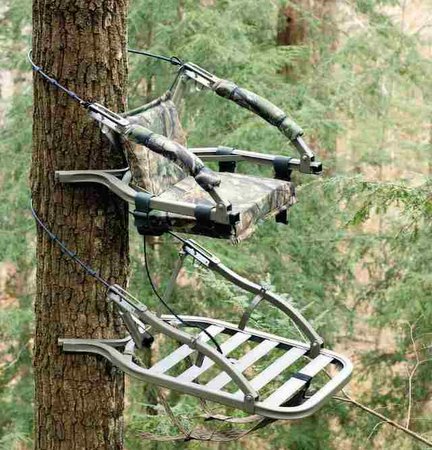
English: Tree Stand
 (Photo credit: Wikipedia)
Michigan’s bowhunting season opens today, Oct. 1, and Department of Natural Resources conservation officers are sharing tips for a safe bowhunting experience.
“Bowhunting is a popular pastime in Michigan and we want everyone to have a safe and enjoyable hunting season,” said Sgt. Tom Wanless, supervisor of the DNR's hunter education program. “There are some common-sense safety tips every hunter should review before heading to the woods.”
The top safety tips for bowhunting are:
  • Before you go out, inspect equipment, including your tree stand. If anything is worn, frayed, cracked or peeling, replace it or get it fixed. If using a compound bow or crossbow, make sure the cables and pulleys are in good working order.
  • When sharpening broadheads, be careful and take your time.
  • Practice tree-stand safety. Nearly every year, a Michigan hunter is killed or seriously injured because he or she fell out of a tree stand. The DNR recommends using a full-body safety harness to get into and out of your tree stand.
  • If using a tree stand, always use a haul line to raise and lower your gear.
  • Keep arrows in the quiver until you are ready to use them. A common injury is to stab or injure yourself or a hunting companion while carrying arrows in your hand or nocked on your bow.
  • Obtain permission from a landowner before hunting on his or her land, or using their land to access public land.
  • Never take a shot at a deer that is beyond the maximum effective range at which you are comfortable shooting.
  • If you are successful, field dress your deer and cool its meat immediately. Michigan’s unpredictable weather means we sometimes have warm October days. Warm temperatures can cause the meat to spoil quickly.
  • When heading out to the woods, make sure you tell someone reliable where you are going and what time to expect you back. This information is valuable in helping conservation officers or sheriff's deputies to find you if you are lost.
  • Also, think about carrying a cell phone, a compassa flashlight and other small safety items when in the woods

Wednesday, September 24, 2014

TREESTAND SAFETY

English: Tree Stand
 (Photo credit: Wikipedia)
Bow hunters preparing for the upcoming season should check all their gear to make sure it is in proper working order, especially treestands and safety harnesses, before heading to the timber.
“Falls associated with tree stand use are the most common hunting incidents during the bow season,” said Megan Wisecup, hunter education administrator for the Iowa Department of Natural Resources. “Hunters should always wear a safety harness and use caution when climbing.”
Wisecup said there are a number of tips hunters can use to prevent injury when using a treestand.
“Make sure to select a tree that fits the tree stand recommended limits and follow the three point rule of tree stand safety – always have three points of contact to the steps or ladder before moving,” she said.
“That could be two arms and one leg holding and stepping on the ladder or one arm and two legs in contact with the ladder before moving. And remember the elements – the rain, frost, ice or snow can cause steps to become slippery so check the security of the step before placing your weight on it.”
Other safety tips include using a haul line to pull gear and the unloaded firearm or bow to the stand and hunters should never climb with anything in their hands or on their back.  When exiting the stand, use the haul line to lower the gear on the opposite side of the tree.
“Get familiar with the safety harness. Read the instructions for it and for the tree stand itself so you know how to use it properly and know its limitations,” Wisecup said. 
Falls from tree stands are required to be reported to the DNR if a person seeks medical attention for an injury received while entering, exiting or sitting in a stand.
“The basic rules of tree stand safety don’t apply to just bow hunters, but to firearm hunters using an elevated device or stand,” she said.  “We want everyone to be safe out there. The goal at the end of every hunt is to arrive home safely.”

Thursday, October 10, 2013

Michigan conservation officers stress safety when using a tree stand

As hunters head to the woods for the archery deer season, Michigan conservation officers are stressing
safety for those hunting from tree stands or elevated platforms.

“Tree stands are popular with many hunters who want an increased advantage, but improper use of them can result in injuries and death,” said Sgt. Tom Wanless, Hunter Education Program supervisor for the Michigan Department of Natural Resources. “We always stress safety when using a tree stand or raised platform.”

The important things to remember when using a tree stand for hunting are:
 

  • Buy a safe and comfortable stand and harness that's right for you. Safe and reliable equipment reduces your chance of injury.
  • Carefully read all instructions and warnings provided with your stand.
  • Practice setting up your stand and safety equipment at ground level first. Use all recommended safety straps and pins to secure the stand.
  • Wear the safety harness at all times when climbing, hunting and descending.
  • Choose a harness with a quick-release system that will hold you right-side-up and not restrict your breathing should you fall.
  • Maintain your equipment – look for wear, stress points and loose fasteners. Fix or replace worn equipment immediately.
  • Choose as straight a tree as possible, and watch for dead, overhanging limbs and rotten wood.
  • Use extra care when hunting from a smooth-barked tree (such as aspen, maple, hickory and beech) because if it rains, they get slippery.
  • Use extra care when hunting from a frozen tree. Avoid using elevated stands when it's icy.
  • Always use a haul rope to bring gear, firearm or bow to and from the ground.
  • Always unload your gun before hauling.
  • If hauling a bow, tie your line to the top limb of the bow when climbing and the bottom when descending to avoid snagging arrows in tree branches.
  • Be extra alert when climbing or descending from the stand. These are when most tree-stand accidents occur.
For more information on hunting regulations and safe use of equipment, check the 2013 hunting digests