Saturday, October 19, 2013

Attention hunters: pipeline construction under way in southern Michigan

As hunters go into the field in southern Michigan this season, they should be aware that they may see
courtesy insideclimatenews.org
some construction activity in the woods and should use caution.

Enbridge is currently constructing segments of the Line 6B pipeline in Michigan. This work will continue during both small and big game hunting seasons. The Line 6B pipeline runs from Griffith, Ind., to Marysville, Mich., and crosses 11 counties in Michigan: Berrien, Calhoun, Cass, Ingham, Jackson, Kalamazoo, Livingston, Macomb, Oakland, St. Clair and St. Joseph.

Hunters should avoid hunting near construction sites and are urged to use caution when driving near areas of pipeline construction. Hunters should also watch for flaggers, construction caution signs, slow traffic and workers in these areas. The pipeline right-of-way is private property and should not be entered.

More information about the Line 6B pipeline replacement project, including county-by-county maps, is available at enbridge.com/Line6BReplacementProjects or by calling 866-410-4356.

Thursday, October 17, 2013

New Antlerless Deer Muzzleloader Season a Success for Ohio Hunters

English: White-tailed deer
 (Photo credit: Wikipedia)
COLUMBUS, OH – Ohio muzzleloader hunters enjoyed warm weather as they harvested 5,608 antlerless white-tailed deer during the new antlerless-only muzzleloader hunting weekend Oct. 12-13, according to the Ohio Department of Natural Resources (ODNR).

“Ohio’s first antlerless-only muzzleloader deer season was a success, and we are pleased so many hunters participated,” said ODNR Director James Zehringer. “We remain committed to providing Ohio’s sportsmen and women with some of the best hunting opportunities in the nation.”

The new antlerless muzzleloader weekend was the first opportunity to take advantage of Ohio’s new extended hunting hours. A half hour of golden opportunity hunting time after sunset was added to all of this year’s upcoming deer-gun hunting seasons.

The Ohio counties that reported the most checked deer during the 2013 antlerless-only muzzleloader season: Ashtabula (200), Licking (164), Guernsey (144), Muskingum (143), Knox (141), Coshocton (138), Adams (135), Columbiana (128), Carroll (120), Athens (117) and Trumbull (117).

The ODNR Division of Wildlife remains committed to properly managing Ohio’s deer populations through a combination of regulatory and programmatic changes. This new early muzzleloader season also serves to help manage the state’s deer herd. Progress toward reducing locally abundant herds can be expected, and strides have been made to reduce deer herds in many counties closer to target levels.

Ohio hunters are encouraged to hunt more does this season to help the needy in their area. The ODNR Division of Wildlife is working with Farmers and Hunters Feeding the Hungry (FHFH) to help pay for the processing of donated venison. Hunters who donate their deer to a food bank are not required to pay the processing cost as long as funding for the effort lasts. More information about this program can be found online at fhfh.org.

Deer hunting in Ohio continues to be a popular activity for many who enjoy the outdoors. Ohio hunters checked 218,910 deer during the 2012-2013 season. Ohio ranks fifth nationally in resident hunters and 11th in the number of jobs associated with hunting-related industries. Hunting has a more than $853 million economic impact in Ohio through the sale of equipment, fuel, food, lodging and more, according to the National Shooting Sports Foundation’s Hunting in America: An Economic Force for Conservation publication. Find more information about Ohio deer hunting at wildohio.com.

ODNR ensures a balance between wise use and protection of our natural resources for the benefit of all. Visit the ODNR website at ohiodnr.gov.


Editor’s Note: A list of all white-tailed deer checked by muzzleloader hunters during the 2013 antlerless muzzleloader hunting season, Oct. 12-13, is shown below. The antlerless muzzleloader harvest numbers do not include archery numbers.

Adams: 135; Allen: 46; Ashland: 111; Ashtabula: 200; Athens: 117; Auglaize: 39; Belmont: 99; Brown: 94; Butler: 57; Carroll: 120; Champaign: 36; Clark: 28; Clermont: 91; Clinton: 34; Columbiana: 128; Coshocton: 138; Crawford: 32; Cuyahoga: 5; Darke: 26; Defiance: 48; Delaware: 38; Erie: 25; Fairfield: 51; Fayette: 7; Franklin: 9; Fulton: 29; Gallia: 60; Geauga: 63; Greene: 26; Guernsey: 144; Hamilton: 18; Hancock: 31; Hardin: 43; Harrison: 115; Henry: 14; Highland: 79; Hocking: 103; Holmes: 89; Huron: 80; Jackson: 62; Jefferson: 82; Knox: 141; Lake: 18; Lawrence: 54; Licking: 164; Logan: 77; Lorain: 83; Lucas: 28; Madison: 19; Mahoning: 75; Marion: 27; Medina: 68; Meigs: 88; Mercer: 26; Miami: 20; Monroe: 68; Montgomery: 18; Morgan: 65; Morrow: 53; Muskingum: 143; Noble: 83; Ottawa: 10; Paulding: 56; Perry: 54; Pickaway: 18; Pike: 51; Portage: 64; Preble: 41; Putnam: 33; Richland: 105; Ross: 85; Sandusky: 27; Scioto: 64; Seneca: 69; Shelby: 63; Stark: 66; Summit: 9; Trumbull: 117; Tuscarawas: 115; Union: 32; Van Wert: 19; Vinton: 79; Warren: 39; Washington: 72; Wayne: 83; Williams: 93; Wood: 16 and Wyandot: 58. Total: 5,608.

Tuesday, October 15, 2013

Blaze orange safety requirement reduces hunting accidents

Department of Natural Resources Logo

With Minnesota’s small game hunting season underway and the firearm deer season set to begin Nov. 9, the Minnesota Department of Natural Resources (DNR) says making a blaze orange fashion statement this fall might not get you on the best-dressed list, but it just might save your life.
“Wearing blaze orange clothing is a safety requirement to hunt or trap during Minnesota’s small game season or deer season,” said Capt. Mike Hammer, DNR enforcement education program coordinator. “It’s important to be seen by others.”

Small Game Seasons: At least one visible article of clothing above the waist must be blaze orange when taking small game, except when hunting wild turkeys, migratory birds, raccoons, predators, when hunting by falconry, trapping or while hunting deer by archery while stationary.
Deer Season: The visible portion of a cap and outer clothing above the waist, excluding sleeves and gloves, must be blaze orange when hunting or trapping during any open season where deer may be taken by firearms (including special hunts, early antlerless, youth seasons and muzzleloader). Blaze orange includes a camouflage pattern of at least 50 percent blaze orange within each square foot. This restriction does not apply to migratory bird hunters on waters or in stationary shooting locations or to trappers on waters.
“The failure to wear to wear blaze orange puts a hunter in jeopardy of not being seen by someone who does not take the time to properly identify their target and what’s beyond it,” Hammer said.
Hammer recommends faded blaze orange garments be replaced.
“Blaze orange, more than any other color, is the most easily seen and recognized bright, unnatural color against a natural background,” Hammer said. “This shade of orange is the only satisfactory color for hunters to wear under all weather and light conditions. The color of the cap, vest, or coat should be plainly visible from all sides while it is being worn.”
From the standpoint of hunter safety, the wearing of this high-visibility color while deer hunting and while small game hunting in heavy cover, such as for grouse and pheasant, is a great communications tool.
“Blaze orange clothing is a tremendous aid in helping hunters maintain visual contact with one another, particularly when moving through dense cover or woods,” Hammer said. “Any hunter who has ever identified someone strictly by seeing blaze orange knows its value in keeping track of other hunters in the field.”
For those that use ground blinds, Hammer said to remember to place some blaze orange on the outside of the blind for others to see. Tent style blinds can fully conceal even the best dressed hunter.
Some safety tips for nonhunters:
  • Wear bright clothing. Choose colors that stand out, like red, orange or green, and avoid white, blacks, browns, earth-toned greens and animal-colored clothing. Blaze orange vests and hats are advisable.
  • Don’t forget to protect pets. Get an orange vest for an accompanying dog.
  • Make noise. Whistle, sing or carry on a conversation when walking to alert hunters that someone is in the area. Sound carries well across woods and forests, and hunters should listen for any sounds of animal movement.
  • Be courteous. Don’t make unnecessary noise to disturb wildlife. Avoid confrontations.
  • Make presence known. If a nonhunter hears shooting, the person should raise their voice and let hunters know they’re in vicinity.
  • Know the dates of hunting seasons. Learn about where and when hunting is taking place.
  • If hunting makes a nonhunter uneasy, the nonhunter should choose a hike in a location where hunting is not allowed.

Monday, October 14, 2013

Hunters Have More Opportunity to Hunt Public Land in Central Ohio

 The Ohio Department of Natural Resources (ODNR), Division of Wildlife is pleased to announce that
central Ohio hunters will have additional public land hunting opportunities at the Big Island Wildlife Area in Marion County this fall.

The Division of Wildlife recently took possession of two properties totaling 100 acres adjacent to the Big Island Wildlife Area.  The previous landowners had enrolled both properties in the Wetland Reserve Program (WRP) prior to acquisition.  The properties came to the Division of Wildlife with 26 acres of wetlands and 65 acres of warm season grassland already established.  This addition brings the total acreage of the Big Island Wildlife Area to 5,972 acres.

The Big Island Wildlife Area is located five miles west of Marion on State Route 95 and lies within the former Sandusky Plains, one of the larger prairies that existed in Ohio at the time of settlement.  Most of the once expansive tall grass prairie was converted to farmland.  The Division of Wildlife began purchasing land for the Big Island Wildlife Area in 1958 and since then has restored grasslands and wetlands in an effort to improve the area for the wildlife species that depend on these habitats for survival.

The wealth of wildlife found in the abundant wetlands and grasslands at Big Island Wildlife Area make it a popular place for hunters and wildlife watchers alike.

Visit the ODNR Division of Wildlife website at willdohio.com to find a map of the Big Island Wildlife Area or to find more public hunting opportunities in your area.

Friday, October 11, 2013

Wisconsin Department of Natural Resources Outdoor Report

Horseshoe Island in Door County, Wisconsin fro...
(Photo credit: Wikipedia)
Fall color now peaking in central Wisconsin
Fall colors (exit DNR) are now peaking in central Wisconsin, and while colors are reported as past peak in north central Wisconsin, they are still at peak in the northeast and northwest. Heavy rains in the last week brought down a lot of leaves across much of the state, but especially in the north.
The rain and fog did put a damper on last weekend’s youth deer hunt, but there were still many reports of successful young hunters. And the leaf drop should be aiding archery deer hunters as well as grouse, partridge and woodcock hunters.
With unseasonably warm temperatures recently, the waterfowl migration has been slow but this past week did see a major flight of northern ducks into the state, including many redheads, scaup, common goldeneye, buffleheads and an initial wave of canvasbacks. Canada goose numbers are slowly picking up with increased numbers at Horicon and Theresa wildlife areas.
The southern zone duck season reopens this Saturday, and with the federal government shutdown, DNR officials have been receiving many inquiries on what areas are open for hunting. While the Horicon and Mississippi national wildlife refuges are closed, the Horicon Marsh State Wildlife Area and all state, county and local access points on the Mississippi River and the waters of the Mississippi and all state and local public lands remain open. Additionally, while campground and facilities within the Chequamegon and Nicolet national forests are closed, the forest lands themselves are open.
The rain coupled with some strong winds made for tough fishing conditions in the Northwoods. Musky anglers continue to provide the most fishing pressure and success has continued to be generally good, with most anglers having now switched from artificial baits to live suckers. Walleye haven't settled into a solid fall pattern yet, but there has been a surge in crappie action.
The rain did draw more trout and salmon up Lake Michigan tributaries, with fish reported in the Oconto, Ahnapee, Kewaunee, East and West Twin, Sheboygan and Root rivers. Salmon were also being reported all over Door County with every major marina having some fish inside. Perch fishing has also been good along the bay side of Door County.
The Root River Steelhead Facility had more success this week and has now processed more than 375 fish. The facility will be hosting an open house this Saturday, Oct. 12, from 9 a.m. to 3 p.m. with guided tours, fish spawning demonstrations, fly casting lessons, knot and fly-tying, and tips for cooking fish.
The Gov. Tommy G. Thompson State Fish Hatchery in Spooner continues its harvest of walleye for stocking in state waters. The hatchery has more than quadrupled production of larger walleye fingerlings under the Wisconsin Walleye Initiative, which aims to stock more larger walleye by expanding production at state hatcheries and at private, tribal and municipal hatcheries.
Lots of other events are also taking place this weekend with the 9th Annual Harvest Moon Festival at the Capital Springs State Recreation Area near Madison on Friday, and on Saturday, Smokey Bear’s Spook-tacular candlelight hike at Peninsula State Park in Door County, and a candlelight hike and astronomy program at Governor Dodge State Park in Iowa County. For a listing search the DNR website for “Get Outdoors.”

Thursday, October 10, 2013

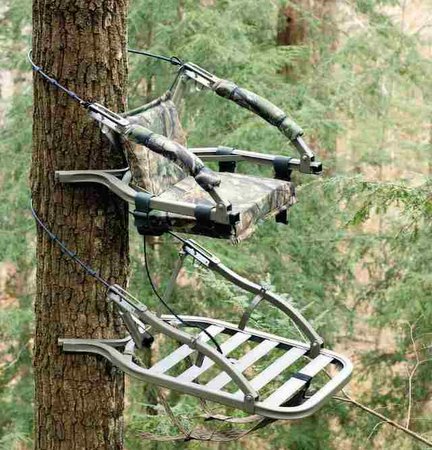
Michigan conservation officers stress safety when using a tree stand

As hunters head to the woods for the archery deer season, Michigan conservation officers are stressing
safety for those hunting from tree stands or elevated platforms.

“Tree stands are popular with many hunters who want an increased advantage, but improper use of them can result in injuries and death,” said Sgt. Tom Wanless, Hunter Education Program supervisor for the Michigan Department of Natural Resources. “We always stress safety when using a tree stand or raised platform.”

The important things to remember when using a tree stand for hunting are:
 

  • Buy a safe and comfortable stand and harness that's right for you. Safe and reliable equipment reduces your chance of injury.
  • Carefully read all instructions and warnings provided with your stand.
  • Practice setting up your stand and safety equipment at ground level first. Use all recommended safety straps and pins to secure the stand.
  • Wear the safety harness at all times when climbing, hunting and descending.
  • Choose a harness with a quick-release system that will hold you right-side-up and not restrict your breathing should you fall.
  • Maintain your equipment – look for wear, stress points and loose fasteners. Fix or replace worn equipment immediately.
  • Choose as straight a tree as possible, and watch for dead, overhanging limbs and rotten wood.
  • Use extra care when hunting from a smooth-barked tree (such as aspen, maple, hickory and beech) because if it rains, they get slippery.
  • Use extra care when hunting from a frozen tree. Avoid using elevated stands when it's icy.
  • Always use a haul rope to bring gear, firearm or bow to and from the ground.
  • Always unload your gun before hauling.
  • If hauling a bow, tie your line to the top limb of the bow when climbing and the bottom when descending to avoid snagging arrows in tree branches.
  • Be extra alert when climbing or descending from the stand. These are when most tree-stand accidents occur.
For more information on hunting regulations and safe use of equipment, check the 2013 hunting digests

Tuesday, October 8, 2013

Minnesota: No surplus either-sex deer permits available for 2013

English: A white-tailed deer

For the first time since surplus permits were offered in 2007, no leftover either-sex deer permits are available for purchase after the lottery deadline, the Minnesota Department of Natural Resources (DNR) said.
The DNR offered 38,850 either-sex permits in 58 deer permit areas this year. Every permit area received applications for at least 100 percent of the permits available.
In lottery deer areas, firearm and muzzleloader license holders who intend to take an antlerless deer must have an either-sex permit; otherwise, they are restricted to hunting bucks. The total bag limit for deer in lottery areas is one deer per year.
Availability of leftover permits has declined since the development of the hunter choice management designation, which was first used in 2011. Similar to lottery areas, hunter choice-designated areas have a bag limit of one deer; however, no limit is placed on the number of available either-sex permits and lottery applications are not required.