Showing posts with label Michigan Hunting. Show all posts

Saturday, July 16, 2016

Michigan: Antlerless deer license applications on sale through Aug. 15

Antlerless quotas for each DMU can be found at mi.gov/deer

The Michigan Department of Natural Resources reminds hunters that the application period for antlerless deer licenses is now open and runs through Aug. 15.
Hunters may apply for one license in any open Deer Management Unit (DMU) statewide; a nonrefundable $5 fee is charged at the time of application. Hunters may choose to apply for either one private-land or one public-land license online at E-License or at any authorized license agent or DNR Customer Service Center.
Young hunters, ages 9-16, can purchase one junior antlerless deer license over the counter July 15-Aug. 15. No application is required. A 9-year-old must be 10 by Sept. 26 to purchase this license.
Any leftover antlerless deer licenses not issued in the drawing will be sold on a first-come, first-served basis beginningSept. 8 at 10 a.m. EDT, until license quotas are met. 
Antlerless deer license quotas for each DMU can be found at mi.gov/deer. Please note, DMU 333 has unlimited antlerless licenses that may be purchased without application beginning Sept. 8 at 10 a.m.
Drawing results and leftover license availability may be viewed at mi.gov/deer, beginning Sept. 1.
For additional information, the 2016 Michigan Antlerless Deer Digest is available online at mi.gov/dnrdigests.
Hunters also are reminded that chronic wasting disease has been confirmed in a free-ranging deer in Michigan. CWD is a fatal neurological disease that affects white-tailed deer, mule deer, elk and moose.
The Michigan Natural Resources Commission expanded the Core Chronic Wasting Disease (CWD) Area to include 17 townships. This area, which will continue to be referred to as DMU 333, now will consist of Lansing, Meridian, Williamstown, Delhi, Alaiedon and Wheatfield townships in Ingham County; DeWitt, Bath, Watertown, Eagle, Westphalia, Riley, Olive and Victor townships in Clinton County; Woodhull Township in Shiawassee County, and Oneida and Delta townships in Eaton County.
The CWD Management Zone also has expanded; it now will include the remainder of Clinton, Eaton, Ingham and Shiawassee counties, as well as all of Ionia County. The expanded Management Zone will be referred to as DMU 419. To learn more about chronic wasting disease, visit mi.gov/cwd.
Don’t forget you can purchase your $5 Pure Michigan Hunt applications anywhere licenses are sold. Hunters may buy as many applications as they want. Three lucky winners will get prize packages that include elk (Michigan residents only), bear, deer and turkey licenses; first pick at a managed waterfowl hunt area, plus firearms, crossbows and much more – a prize package worth over $4,000. For more information, visit mi.gov/pmh.

Friday, June 3, 2016

Michigan ‘Learn to Hunt’ mentor program gives newcomers a boost

There’s an old saw about how you learn new skills – you learn by doing.
That’s the focus of the “Learn to Hunt” program, a partnership led by Michigan State University, with assistance from the National Wild Turkey Federation, the Boone and Crockett Club, Pheasants Forever and the Michigan Department of Natural Resources.
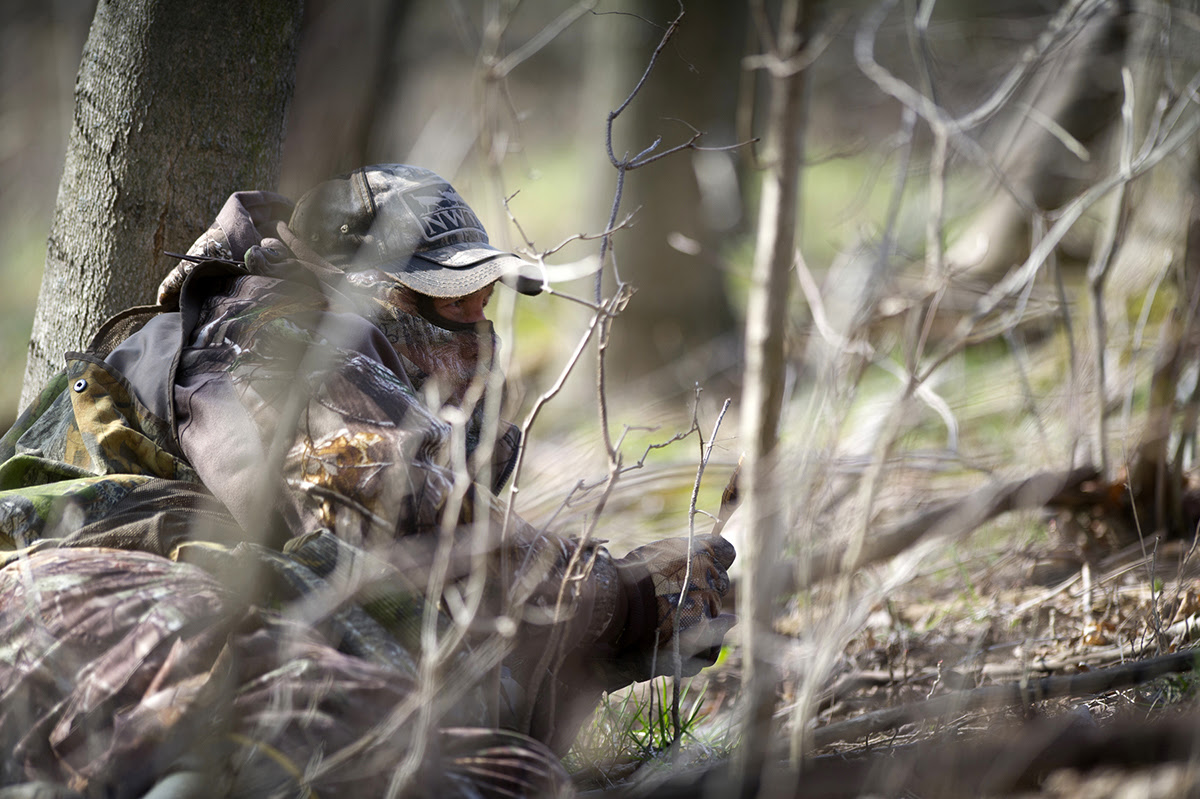
Steve Sharp is shown calling a wild turkey at the Barry State Game Area in Barry County.Learn to Hunt is part of the turkey federation’s Recruit, Retain and Reactivate (R3) outreach program and puts would-be hunters in contact with mentors who can guide them through the hunting process.
“(The program) is designed for adults new to hunting,” said Johanna Dart, a social work graduate student at MSU, who assisted in the design of the program for the university’s Fisheries and Wildlife Department.
Learn to Hunt began last fall with a deer-hunting initiative. Recently, 17 adults signed up for a spring session on turkey hunting that culminated in a late May, weekend hunt at the Barry State Game Area in the southwestern Lower Peninsula.
“We wanted to try to offer another species and apply what we learned from the deer program,” Dart said. “We found in our pre-surveys that learning to hunt with an experienced mentor was important. A lot of adults didn’t feel comfortable going out in the woods with a firearm or bow without someone to show them how.”
Dart, 26, said she thinks it’s difficult to learn to hunt via YouTube.
“You can – you can teach yourself anything online – but to have confidence in yourself and grasp some of the concepts, it helps to have someone show you,” she said. “It’s very helpful.”
Dart would know. She’s been interested in hunting for some time, but she found the prospect of approaching someone for more advice somewhat daunting.
“It’s interesting being in my demographic,” she said. “I was adopted by a single mother and no one in our family knew anything about hunting and was never exposed to firearms.”
Dart said it’s “very intimidating” to go out by yourself or to ask someone to take you.Learn to Hunt event organizer Johanna Dart with her first turkey, called in by Steve Sharp at the Barry State Game Area in Barry County.
“I took hunter safety with my best friend and I remember going and everyone else was 9,” she said. “I think when adults see that, they think hunting is not for them.”
Dart took part in a hunting outing herself this spring. She teamed up with mentor Steve Sharp – the R3 coordinator with the turkey federation. She successfully killed a turkey.
Sharp, who is a lifelong sportsman and long-time federation employee, said the program is accomplishing exactly what it needs to.
“We had a great time teaching these folks some new tricks,” said Sharp, who has led workshops on safe firearms handling, scouting for turkey and other topics. “I think we’re recruiting some new hunters and that’s our goal.”
A number of the students enrolled in the program killed turkeys this spring, including two at the May weekend event in Barry County.
Steve Vandermey, a 62-year-old first-time hunter, was one of them.
Vandermey and his wife, Ruth, signed up as a team. They shared time with mentor Brian Medendorp the first morning of the weekend hunt.
“My wife and I had been talking about learning to hunt for a couple of years but couldn’t figure out how to get started,” Vandermey said. “I saw a speaker at a sports show, met Steve Sharp and signed up. We needed to learn and this program was made for us.”
Medendorp, who is a heating and cooling contractor from Hastings and a turkey federation officer, took the couple into the woods where he thought some birds might be roosting.
Steve and Ruth Vandermay with their tagged turkey at the camp located at the Barry State Game Area Field Office.When the trio didn’t meet with any success at dawn, they began walking through the woods, turkey calling.
“We heard a bird gobbling and walked to within 250 yards and sat down and started calling,” Medendorp said. “We got him to come in the rest of the way. He shot it at 27 yards. Perfect.”
The Vandermeys agreed, saying they think they’ll go out turkey hunting again.
“It seemed like it was pretty imposing at first, but now it seems like it’s doable,” Vandermey said. “This program was just what we needed.”
Ruth said, “It was an awesome experience – fun.”
Brooke Burns works at the Gander Mountain sporting goods store in Lansing. She met Mike Vanderguchte, a senior at MSU and an instructor in the Learn to Hunt program, at the store. She signed up for the program when Vanderguchte told her about it.
Burns went out during the first morning of the hunt with her mentor, Wendy Osterbaan, a member of the Thornapple Valley Chapter of the turkey federation. Though they had three birds within shooting range, the turkeys never presented an opportunity.
That evening, the two women went back out.
The pair climbed into a blind and heard a bird gobble at 5:45 p.m. Osterbaan called the turkey. Thirteen minutes later, Burns had killed a 20-pound-plus tom.
“It was pretty exciting,” Burns said. “I think I’m going to have to go again in the fall.”
The group gathered for the recent Learn to Hunt outing at the Barry State Game Area poses for a photograph.Sharp said that’s the goal, adding that he was especially inspired by the young adults who attended the program.
“Sometimes we miss the boat by going directly to the kids and not recruiting their parents,” Sharp said. “When these folks start having families, they’ll take their kids out.”
Not all the participants killed birds, but they said they now know what to do.
“Only about 20 percent of turkey hunters harvest a bird,” said DNR upland game bird specialist Al Stewart. “Turkey hunting is more about the outdoor experience. Just like fishing, the best stories are about the ones that got away.”
Stewart said he observed students learn this firsthand.
“They had many thrilling stories to share by the campfire each evening,” Stewart said. “Learn to Hunt participants also learned that they can harvest their own food and provide a Thanksgiving meal for friends and family. I’m very pleased with the results of this program.”
Chris Henderson, a doctoral student at MSU in fisheries and wildlife, said the program was just what he wanted.
“I just never had a pathway into it,” he said. “I wasn’t raised around it. I heard about this program and jumped at it.
Henderson said there are some pretty big barriers to getting started.
“Getting your first firearms, learning where to go, this program takes care of all that,” he said.
Dawn Street, a 47-year-old real estate agent from Clarkston, said she has always been intrigued by turkey hunting. She accompanied her sister to a turkey federation “Women in the Outdoors” event, met some turkey hunters, heard about the program and signed on.
“I always had the equipment to go, but nobody to take me,” Street said. “Now I can go by myself.”
But will she?
“Absolutely,” she said. “Yes, yes, yes.”

Sunday, December 27, 2015

Michigan: Last elk hunt of 2015 is complete

Although it may not feel like a Michigan December, the final 2015 elk hunt drew to a close last weekend.
“We had crazy weather conditions for this year’s late elk hunt,” said Department of Natural Resources wildlife biologist Shelby Hiestand.  “In a typical year, we would have had a ton of snow on the ground, where hunters could track and pattern elk and really have a better chance at spotting them against the white snow.”
Although conditions may not have been typical for the December elk hunt, the harvest was still quite successful.  Ninety-two percent of hunters harvested an elk this December season, totaling 46 elk.  Each hunter was selected out of a random, weighted lottery of more than 31,000 Michigan hunters who applied to hunt elk this year. 
The latest season, held Dec.  5-13, was open in all elk hunt units in the northern counties of the northern Lower Peninsula. Each elk hunter attended a mandatory elk orientation in Johannesburg to learn about hunting elk, regulations, biology and the history of elk in Michigan.
“This is a once-in-a-lifetime hunt, and our goal is for every hunter to have a safe, enjoyable experience,” said Hiestand. “Most hunters have never hunted elk before, and may not be familiar with areas in northern Michigan.  Elk orientation is a great time to get to talk to hunters and answer any of their questions.”
One hundred elk licenses were available in 2015 – 50 in the early season and 50 in the late season.  
Elk hunting in Michigan is an effective management tool that biologists have used to maintain elk herd numbers, composition and even distribution since 1984, when elk hunts began to occur annually for Michigan residents. The elk application period runs annually from May 1 to June 1.
To learn more about elk in Michigan, including their comeback story, visit www.michigan.gov/elk.  

Saturday, September 5, 2015

Michigan DNR’s Hunting Access Program awarded grant to increase hunting opportunities

The Michigan Department of Natural Resources' Hunting Access Program, which provides access to quality hunting lands near urban areas, soon will expand into the northern Lower Peninsula thanks to a new federal grant.
The Michigan Department of Natural Resources will receive $951,400 to expand its Hunting Access Program into the northern Lower Peninsula to increase private-land hunting opportunities. This grant, awarded by the U.S. Department of Agriculture’s Voluntary Public Access and Habitat Incentive Program, also will improve wildlife habitats by enhancing grassland, forest and food plots.

The Voluntary Public Access and Habitat Incentive Program encourages landowners to allow outdoor enthusiasts greater access to their privately owned land for hunting, bird watching, fishing and hiking. According to a 2013 study by the National Fish and Wildlife Foundation, outdoor recreation supports 6.1 million direct jobs across the country and $646 billion in spending each year. Deer hunting alone attracts more than 700,000 hunters to Michigan each year and contributes billions of dollars to the state’s economy.

Michigan's Hunting Access Program was created in 1977 to increase public hunting opportunities in southern Michigan, where 97 percent of the land base is privately owned. Through HAP, private landowners receive financial incentives for allowing hunters access to their lands. One of the oldest dedicated private-lands, public-access programs in the nation, HAP provides access to quality hunting lands near urban areas.

According to DNR wildlife biologist Mike Parker, “HAP enrollment will be targeted primarily in the agricultural areas in the northeast and western northern Lower Peninsula, where public land is a bit scarce. Grant funds will also be used to restore wildlife habitat on willing HAP properties, to improve opportunities for deer hunters, turkey hunters and small game hunters alike.”

Using funds from Michigan’s recent license restructuring, this new federal grant and an existing USDA grant, the DNR plans to continue expanding the program in the southern Lower Peninsula, the northern Lower Peninsula and the eastern Upper Peninsula over the next three years. 

Visit www.michigan.gov/hap to learn more about the program and to see a current list of private lands available for hunting in Michigan. The HAP Web page includes details about enrolled properties, including types of hunting allowed and aerial photos of the properties.

Saturday, July 2, 2011

Michigan Hunters: Bear License Drawing Results Posted; Leftover Licenses on Sale in July

June 30, 2011

The Department of Natural Resources reminds hunters who applied for the 2011 bear drawing to check their drawing results at www.michigan.gov/huntdrawings. This web page also has information for successful applicants who wish to donate their hunt to an eligible youth or person with an advanced illness.

There are a total of 829 leftover bear licenses available in two bear management units/seasons; 672 licenses for the third hunt in the Bergland Unit (Sept. 25 - Oct. 26) and 157 licenses for the third hunt in the Carney Unit (Sept. 25-Oct. 26). These licenses may be purchased online or from any license agent on a first-come, first-served basis on the following dates:
Holders of Lifetime Comprehensive Licenses may purchase a leftover license beginning at 10 a.m. Monday, July 11.


Unsuccessful applicants may purchase a leftover license beginning at 10 a.m. Monday, July 18.


Any hunter may purchase a leftover license beginning at 10 a.m. Monday, July 25, including those who did not apply.


Hunters are reminded that their preference points will reset to zero if they purchase a leftover license, except for Lifetime Comprehensive License holders.

Hunters have an additional opportunity to get a bear license by applying for the 2012 Pure Michigan Hunt drawing. Each application is $4 and you may apply as many times as you like. Three lucky winners will receive a hunt package that includes an elk, bear, turkey, and antlerless deer license. For more information, go to www.michigan.gov/puremichiganhunt. Season dates and regulations have not yet been established for the 2012 hunting seasons.

The Michigan Department of Natural Resources is committed to the conservation, protection, management, use and enjoyment of the state's natural and cultural resources for current and future generations. For more information, go to www.michigan.gov/dnr.

Friday, July 1, 2011

Michigan: Results of Elk Drawing Posted on DNR Website

June 30, 2011

Results of the license drawing for the 2011 elk hunting seasons have been posted on the Department of Natural Resources website at www.michigan.gov/huntdrawings. This web page also has information for successful applicants who wish to donate their hunt to an eligible youth or person with an advanced illness.

Two elk seasons will be held in 2011. The first season will run from Aug. 30 ? Sept. 2 and Sept. 23-26. The second season will run from Dec. 3-11. An additional season may be held Jan. 18-22, 2012; if the DNR determines the harvest is insufficient to meet management goals.

A total of 55 any-elk and 100 antlerless-only elk licenses have been issued.

Hunters have an additional opportunity to get an elk license by applying for the 2012 Pure Michigan Hunt. Each application is $4 and you may apply as many times as you like. Three lucky winners will receive a hunt package that includes an elk, bear, turkey, and antlerless deer license. For more information, go to www.michigan.gov/puremichiganhunt. Season dates and regulations have not yet been established for the 2012 hunting seasons.

Hunters are reminded of a new tool available to help them find public lands for hunting. Mi-HUNT allows hunters to select lands based on a number of criteria, including vegetative types and topography. To use Mi-HUNT, visit the website at www.michigan.gov/mihunt.

The Michigan Department of Natural Resources is committed to the conservation, protection, management, use and enjoyment of the state's natural and cultural resources for current and future generations. For more information, go to www.michigan.gov/dnr.