Saturday, March 16, 2013

IOWA NEW HUNTING ATLAS AVAILABLE ONLINE

English: Iowa Department of Natural Resources logo
English: Iowa Department of Natural Resources logo (Photo credit: Wikipedia)
Hunters have a new tool that may improve their in the field experience even before opening day.

The Iowa hunting atlas is an interactive map that shows 600,000 acres of public hunting land that is owned by the state, county or federal governments. The atlas is available online at www.iowadnr.gov/hunting.

A click on an area will show basic information like zone and open season, and links to maps, if available.

The atlas view from above allows hunters to zoom in on an area, see how to get there, the lay of the land and where one parcel of public hunting land is in relation to others. Information will be updated as public hunting lands are acquired.

Monica Thelen, who spearheaded the project for the Iowa Department of Natural Resources said the atlas is currently usable on computers and tablets and they are working toward a version of the map for mobile phones.

“This is current information at their fingertips, available 24 hours a day that hunters can access to plan their hunts,” Thelen said. “The best way to use the atlas is to spend time getting familiar with it. Spring turkey hunting begins in April so there is an opportunity here for hunters to find a new place to hunt public land using the atlas.”

Friday, March 15, 2013

North Dakota: Deer Samples Negative for CWD

Description unavailable
 (Photo credit: pennstatenews)

Samples taken from North Dakota deer during the 2012 hunting season have all tested negative for chronic wasting disease, according to Dr. Dan Grove, wildlife veterinarian for the State Game and Fish Department.

Last fall, samples for CWD testing were taken from more than 1,300 deer harvested by hunters in the western third of the state.

“As always, the success of our surveillance program could not be accomplished without the cooperative efforts of hunters, meat processors and taxidermists,” Grove said.

Since the Game and Fish Department’s sampling efforts began in 2002, more than 23,000 deer, elk and moose have tested negative for CWD. Three mule deer, one each in 2009, 2010 and 2011, taken from unit 3F2 in southwestern North Dakota tested positive. All three were within 15 miles of each other.

The hunter-harvested surveillance program annually collects samples taken from hunter-harvested deer in specific regions of the state. The Game and Fish Department also has a targeted surveillance program that is an ongoing, year-round effort to test animals found dead or sick.

CWD affects the nervous system of members of the deer family and is always fatal. Scientists have found no evidence that CWD can be transmitted naturally to humans or livestock.

Thursday, March 14, 2013

Spring is best time to take hunter education classes

Michigan residents considering hunting in 2013 and who need to complete a hunter education course should enroll in a class this spring, when offerings are plentiful. Classes are held year-round, but April, May, August and September are traditionally the months when classes are most available.

"We encourage anyone considering hunting this year who needs to complete a hunter education course to enroll now in a spring course,” said Sgt. Jon Wood, hunter education program supervisor for the Department of Natural Resources. “Waiting until the last minute before you go deer hunting this fall can often translate into difficulty finding a class or an instructor available for a field day, if you are planning to take the home-study or online course.”

Michigan has three types of hunter education courses – traditional classroom, home-study and online. Anyone born on or after Jan. 1, 1960, is required to complete the course before buying a Michigan hunting license or taking an out-of-state hunting trip. Exceptions are made for youths under the age of 10 who are hunting under a Mentored Youth Hunting license or hunters older than 10 who are hunting with an apprentice hunting license. Hunters can hunt under the apprentice program for two years before they are required to take hunter education.

The traditional classroom course is a minimum of 10 hours and includes both classroom and field work with an instructor. The fee for the class is $10 or less to cover field supplies. The home-study course features a workbook to complete classwork. A field day is required with the home-study course and must be scheduled with an instructor prior to starting the course. Michigan also offers two approved online hunter education courses, www.hunter-ed.com/Michigan and www.huntercourse.com. Students who choose the online course will complete their classwork online, and then have a field/skills day with an instructor and take a written exam. The field day must be scheduled with an instructor prior to starting the online course.

For more information about hunter education and locations of classes, go to www.michigan.gov/huntereducation
 

Tuesday, March 12, 2013

Wisconsin Department of Natural Resources Outdoor Report

Door County
Door County (Photo credit: Wikipedia)

Winter continued to hang on this week, with a mid-week storm dropping from 2 to six to 8 inches across a swath from northwestern to south eastern Wisconsin. Snow depths range from a low of 6 to 8 inches in the south to nearly 2 feet in some areas the north. That could change rapidly, though with warmer temperatures and rain in the forecast for this weekend across southern and central Wisconsin.

Snowmobile trails reopened in many counties in southern and central Wisconsin with conditions generally fair to good, while many trails in the north range from good to excellent. State recreational safety wardens are cautioning snowmobilers that while many trails have reopened, rain and warm temperatures this weekend could cause conditions to deteriorate rapidly, especially on waterways. Wisconsin has already recorded 18 snowmobile deaths this winter, and wardens are reminding sledders to slow down and avoid travelling on rivers and lakes.

Some very good cross-country skiing is being reported statewide, from trails in the Southern Unit of the Kettle Moraine all the way to the Northern Highland-American Legion state forests in good to excellent condition. Again, that could change this weekend, so call ahead to check on current conditions.

Participation was quite heavy in some locations for the opening of the early catch-and-release trout season that enjoyed clear water and sunny warmer weather. Trout anglers reported success ranging from moderate to excellent. Lake Superior’s Chequamegon Bay is still locked in ice, though there is a lot of snow on top and the sunny days have been creating slush, and ice fishing has generally been slow. Along Lake Michigan, anglers were now open water fishing on the Fox River at Voyageur Park with some walleye and perch being reported. Northern pike action has been good through the ice on the bay in several locations. Some perch and whitefish were being caught along Door County. Trout and steelhead action has been spotty at Lake Michigan harbors.

Ice depths on inland Northwoods lakes continue to hold in the 18-20 inch range and travel remains tough with the deep snow and slushy conditions on many waters. Ice fishing pressure has been rather light in the past week with these difficult travel conditions and the closure of the game fish season March 3. In the south, northern pike are starting to stage for spawning at Theresa Marsh and other spawning sites.

Wisconsin fishing and hunting licenses for the 2013-14 seasons went on sale Wednesday. Licenses are available through the Online Licensing Center, from authorized license agents and DNR Service Centers or by calling toll-free 1-877-LICENSE (1-877-945-4236). Licenses for the 2012-13 seasons expire March 31.

Snow has temporarily grounded the early March bird migration. Warmer temperatures predicted for this weekend should bring significant thaw to open fields and will likely bring another large push of migrants. Expect to see eagles, red-tailed and red-shouldered hawks, red-winged blackbirds, robins, song sparrows and sandhill cranes. Trumpeter swans are beginning to claim their territory on iced over flowages and goldeneye drakes are starting to display some of their mating rituals and calls.

Monday, March 11, 2013

INDIANA Hunters set record deer harvest in 2012 seasons

Hunters took advantage of new equipment regulations and extra hunting dates to harvest a record 136,248 deer during the 2012 season, according to data the DNR gathered from designated check stations and from a recently implemented online and phone reporting system. 

The total harvest represented a 6 percent increase over the 2011 season’s harvest and topped the previous record of 134,004 deer set in 2010. 

“We started down the path to strategically reduce the deer herd in order to balance the ecological, recreational, and economic needs of all Indiana citizens,” said Mitch Marcus, wildlife chief for the DNR Division of Fish & Wildlife. “To meet that strategy, we initiated several regulation changes to make it easier to take antlerless deer. It appears the regulations may be working.” 

Key regulation changes implemented in 2012 included making crossbows legal equipment for all licensed hunters during archery season; adding a special late antlerless season in designated counties from Dec. 26 to Jan. 6; extending the urban zone season to run continuously from Sept. 15 to the end of January; and allowing youth hunters in the two-day youth season to take whatever the bonus antlerless quota was in the county where they hunted. Archery season also increased by seven days with elimination of the traditional one-week break between early and late segments. 

Crossbow hunters took 8,452 deer, or 6 percent of the overall total. That was an increase from 1,091 deer, or 1 percent, reported in 2011 when crossbows could be used in early archery season only by persons with a disabilities permit or by any licensed hunter in late archery season. 

Hunters using archery equipment tagged more deer in 2012 (27,580) than they did in 2011 (26,715) or 2010 (27,186). 

Youth hunters bagged 3,587 deer, up 55 percent from 2011, and the new special late antlerless season accounted for 10,091 deer. 

It also was the first year of a license bundle, which allowed the buyer to hunt in all segments of deer season—except in urban zones—for a total of one antlered and two antlerless deer. More than 56,600 license bundles were purchased in 2012, second only to the resident firearm license. 

“In previous years, five or six at the most, resident license holders accounted for 42 percent of the harvest,” said Chad Stewart, DNR deer management biologist. “This year, resident license holders accounted for 47 percent of the total harvest. That’s only a couple percentage points, but to move it even that much is pretty significant. That’s probably attributed to the bundle license. We don’t know that for sure, but that’s where we’re leaning because it’s the one thing in the rules that only affected resident hunters.” 

The total harvest was made up of 45,936 antlered deer and 90,312 antlerless deer. The proportion of reported antlered deer in the harvest (34 percent) is the lowest in Indiana’s history while the antlerless total was the highest. 

“Despite the record harvest, trends within the harvest data showed that deer numbers were down this year,” Marcus said. “The number of antlered deer in the harvest was at its lowest point since 2000, an indicator of a reduced deer herd.” 

Stewart said the antlered deer harvest tracks the total population about as well as anything because there are fewer variables to consider. 

“Year-to-year hunter efforts don’t change much, so people aren’t all of a sudden taking three bucks or eight bucks; they’re locked into one buck,” he said, noting the one-buck limit in Indiana. “If there are fewer bucks to kill with the same amount of hunter effort, not as many bucks get killed, which tells us the overall population is down.” 

Additionally, an outbreak of epizootic hemorrhagic disease affected deer in nearly 60 counties. EHD is a viral disease transmitted by biting flies that is often fatal to deer, though some deer will survive the illness. 

“Whether this (population) decline is due to this year’s outbreak of EHD, recent efforts to strategically reduce the deer herd, or a combination of both factors remains to be seen, but probably varies from county to county,” Marcus said. “As we continue on the path to strategically reduce the deer herd, we will monitor the herd and harvest each year and make adjustments to ensure that hunters will have the opportunity to be successful.” 

Switzerland County had the highest reported harvest at 3,506 deer, leading the state for the first time since 2004 and ending a seven-year run by Steuben as the top county. Steuben dropped to fifth with a reported harvest of 3,076 deer, the fewest for that county since 2003. 

Of the total harvest, 82,151 deer were recorded at check stations, 53,389 online, and 708 by phone. 

To read the complete report, go to wildlife.IN.gov and click on the Deer Harvest Summary link at the bottom of the page. 

Wednesday, February 27, 2013

Public meetings set to develop Deer Trustee Report implementation plans


MADISON - The public is invited to play an active role in the implementation of Wisconsin’s Deer Trustee Report through direct participation in a series of meetings hosted by the Department of Natural Resources, starting March 9, in Stevens Point.
map of the UW-Stevens Point Campus
The meeting will take place at UW-Stevens Point’s Lee S. Dreyfus University Center, Alumni Room (350), from 10 a.m. to 3 p.m. It is the first of seven meetings to develop action plans for moving recommendations in the 2012 report forward with the intent of enhancing deer management in the state.
“Part of enhancing deer management is incorporating the observations and wants of a diverse audience of people with a stake in deer and deer hunting in Wisconsin,” said Eric Lobner, DNR Wildlife Supervisor assigned to implementation coordination. “We are inviting the public, tribes, stakeholders and other partners with hopes for a strong response from all. In order to be truly effective, we need people to turn out and weigh in on how to implement recommendations in the report.”
The report contains 62 recommendations assembled by Dr. James Kroll, along with Drs. Gary Alt and David Guynn, who were commissioned by the Governor as the state’s deer trustees to perform an objective evaluation of deer management practices. Four action teams have been formed to help move ideas from recommendations to implementation on the ground.
Each action team will be responsible for reviewing an area-specific grouping of recommendations pulled from the report. The team focus areas are: Deer Management Assistance Program (DMAP); herd health and Chronic Wasting Disease (CWD); regulations and seasons; and science and research.
Action teams will meet simultaneously, so groups are encouraged to send multiple representatives if there is interest in serving on more than one action team. Additionally, team members are asked to attend all meetings
Action team meetings are currently all scheduled from 10 a.m. to 3 p.m. at the UW-Stevens Point location above. The additional dates are April 6 and 27, May 18, June 8 and 29, and July 20, 2013. All meetings are scheduled to be completed by July 20 in order to meet deadlines for the official rule making process.
“DNR’s current role is to create an effective system for collecting, organizing and forwarding the input from the action teams. The efforts of these teams will guide the next steps of the agency, whether that means seeking administrative rule changes or changing how we communicate with hunters,” said Lobner. “We aim to be the ears, while others are the voices, in this process.”
In addition to the meetings, DNR will launch a survey to collect feedback on various aspects of the report with the overarching goal of getting a better understanding of what aspects of the deer management program should change and how. DNR will also use social media and the web to keep the public informed and engaged throughout the process.
More information and the full report are available at dnr.wi.gov, search keywords “deer trustee report.”

Tuesday, February 26, 2013

Wisconsin Department of Natural Resources Outdoor Report

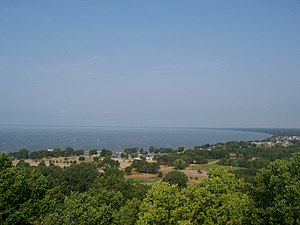
The north end of Lake Winnebago taken from the...
. (Photo credit: Wikipedia)

Snow and cold across much of the state improved late winter recreation opportunities, especially in northern Wisconsin, including ice fishing, snowmobiling and skiing.

Snow conditions are good to excellent in Bayfield and Sawyer counties for the American Birkebeiner Race this weekend. The largest cross-country ski race in North America is expected to attract 10,000 skiers this weekend. Snowmobile trials are also in good riding condition across most of the northern half of the state, with the best conditions in the northern tier of counties. Potawatomi State Park received more than 3-inches of snow so far this week and snowmobile trials are open. They are also open in Flambeau River State Forest, where conditions are good to excellent.

Many others to the south are in poor condition, or closed, including Sauk County’s 400 State Trail.
While ice depths are good in the 18-20 inch range on most Northwood’s lakes, fishing success has been sporadic. Ice fishing has been fair in Oneida County with anglers reporting mixed bags of multiple species on the Willow Flowage.

Panfishing has picked up this past week, along with crappie, bluegill and perch on many Bayfield County lakes with jigs and wax worms as a topper working best for bluegills and smaller minnows on a jig has been working best when catching both perch and crappie. On Lake Minocqua anglers have had decent panfish action.Some nice panfish have also been caught in Shawano County.

A few browns and rainbows have been caught on spawn sacs and shiners off Racine County. In Brown County, perch are the species of choice at Sunset Beach in Suamico, jigging with minnows or wax worms. Anglers report the bite has been sporadic with mornings been the best time to fish.

The 16-day Winnebago sturgeon season will wrap up this weekend. As of Wednesday, on Lake Winnebago, 246 sturgeon had been taken despite poor water clarity in many areas.

Panfish anglers still have time to can catch one of the nearly 30 panfish plan meetings statewide February and March. The public meetings mark the opening phases of efforts by DNR fisheries management to better connect with anglers in Wisconsin. Those attending meetings will be asked to fill out a short questionnaire to help DNR understand their concerns, issues and priorities for panfish. The questionnaire and background materials presented at the meeting are available online.

The 2013 Great Backyard Bird Count concluded on February 18 with more than 3,400 checklists of 134 birds species submitted across Wisconsin. Eagle Appreciation Day is Saturday in Prairie du Chien. And eagles can be seen from the park overlooks and Wisconsin Ridge Campground. They have also been seen soaring over Flambeau River State Forest this week. Turkeys have been seen and heard this week in Oconto, Sauk and Richland counties.

Birders reported significant signs of spring this past week, including singing northern cardinals and black-capped chickadees, drumming woodpeckers, courtship flights of common ravens, and trumpeter swans north all the way to Lake Superior. Sandhill cranes returned to the state in good numbers across southern Wisconsin on Monday, and, bluebirds, a sure sign of warmer, greener days ahead, are here, or on their way, so make sure you put up, or clean out bluebird houses.