Wednesday, June 19, 2013

North Dakota Sponsors Informational Workshop for Young Deer Hunters

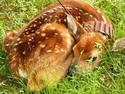
Mule deer (Odocoileus hemionus) in Modoc Count...

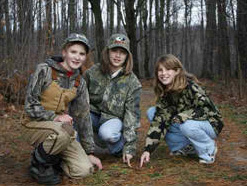
The North Dakota Game and Fish Department’s Encouraging Tomorrow’s Hunters program is a primary sponsor for an outdoor learning event in the Bismarck area on Saturday, July 13.

Put on by the Mule Deer Foundation, the MULEY Day Camp runs from 10 a.m. to 2 p.m. at the Moffit Gun Range. It includes rifle and archery target shooting, hunting and safety information and demonstrations.

All equipment is provided, along with a free lunch and door prizes. To preregister, email ndchair.mdf@gmail.com, or call Ryan Krapp at (701) 471-8788.

The Game and Fish Department’s Encouraging Tomorrow’s Hunters program provides grant dollars to help local communities and organizations fund events that promote youth hunting and shooting sports. For more information, contact outreach biologist Pat Lothspeich at (701) 328-6332.

Saturday, June 15, 2013

Wisconsin Department of Natural Resources Outdoor Report

Door County
Door County (Photo credit: Wikipedia)
Water levels remain high, water temperatures cool for early June

Regular rainfall across the entire state in the last week continues to keep water levels high in many areas and the Great Lakes as well as inland lakes and rivers continue to be colder than normal for early June.

Water levels on the Flambeau River remain high and paddlers are finding trips shorter between landings with the fast moving water. Mississippi River water levels continue to drop but there are still several more feet to go. Most boat landings are back in service. Kayakers heading to Door County for a sea kayak symposium this weekend are being cautioned that Lake Michigan is still unusually cold and quick forming fog is a good possibility.

With school out and as water temperatures begin to heat up people will be hitting the beach. Visit the DNR website for information about new tools and some common sense reminders that can help people find beaches and stay safe and healthy while enjoying Wisconsin’s lakes and rivers.

Lake Michigan trout and salmon fishing has really picked up in the past week with nice catches reported at most ports. Good-sized chinook salmon were reported in the Kewaunee-Door counties area. It hasn’t been an automatic limit, but several boats are bringing in double digit salmon. Lake temperatures are still really low; mid- to upper 40s at the surface and high 30s to mid-40s. Good numbers of coho along with some chinook salmon and lake and rainbow trout have been reported from all southern Lake Michigan harbors, with many trollers reporting catching limits.
Walleye were being caught on the Menominee River, and a number of impressive 50-plus- inch muskies were caught on the river the past week. Along Door County, there continues to be some excellent bass fishing along the northern portion of the peninsula on both the lake and bay sides. Walleye anglers were still having success on lower Green Bay.

Inland, there has been some very good panfish action with crappies on spawning beds and bluegills just beginning to move onto beds. The water temps where the crappies have been biting have been around 58 to 60 degrees. There have been some reports of limit catches and anglers are reminded to use discretion in fishing crappies and bluegills when they are on their nests and very vulnerable to harvest.

Reports of fawns really picked up this week, and unfortunately instances of some well-meaning people bringing in abandoned fawns. Again, doe deer normally leave their fawns for long periods of time when they are first born. This is a protective measure against predators as fawns give off very little scent. If you find a fawn all by itself, leave it be. Its mom is close by.

Canada geese broods are being seen in good numbers and wood duck and mallard ducklings are hatching. Sandhill crane colts have been seen with parents as they feed and learn the surroundings. The first trumpeter swan cygnets have been reported at the Crex Meadows Wildlife Area in Burnett County.

Jack-in-the-pulpit, smooth yellow violet, Tartarian honeysuckle, black and choke cherries, miterwort, Canadian mayflower, baneberry, nodding trillium, hawthorn, blue cohosh, and starflower are blooming in the north. There have also been reports of wild strawberries beginning to fruit and wild blueberries blossoming.

Tuesday, June 11, 2013

Local organization to host meetings on proposed deer antler point restrictions in Michigan’s Lower Peninsula

The Michigan Department of Natural Resources (DNR) today advised the
public that an organization will hold informational meetings regarding deer antler point restriction (APR) proposals at a number of locations in June 2013. Individuals are invited to attend a local event to learn more about the APR process and the specific proposals currently under consideration.

The DNR supports the voluntary implementation of APR on private land. Under guidelines adopted by the Natural Resources Commission (NRC), mandatory regulations proposed by sponsoring organizations will only be recommended for implementation if DNR staff has no biological concerns regarding such regulations, and if a clear majority (at least 66 percent) of support among hunters in the proposed area is documented. Support will be determined by a DNR survey mailed to a sample of hunters who indicated on the 2012 DNR deer harvest survey that they hunted deer in the proposal area.

A group known as the Lower Peninsula Deer Management Initiative (LPDMI) has submitted two different APR proposals to be considered for implementation starting with the 2014 deer season. Antlerless deer regulations within the proposed areas would continue to be determined annually by the DNR. Surveys to measure support for these proposals will be mailed starting in August. Payment by the LPDMI will offset survey costs incurred by this proposal.

The process for review of APR proposals provides a uniform approach for addressing requests by organizations for adopting such regulations. The NRC retains full authority over decisions to implement APR and other harvest regulations regardless of the survey outcome, but the proposal review process provides valuable information to inform those decisions.

The first proposal of the LPDMI calls for implementing a minimum three-point APR for a portion of the northern Lower Peninsula. This proposal area includes Cheboygan, Otsego, Crawford, Roscommon, Ogemaw, Clare, Gladwin and Oceana counties and those portions of Muskegon, Newaygo, Mecosta, Isabella, Midland, Bay and Arenac counties within Hunting and Trapping Zone 2. The APR would not apply to individuals hunting with an apprentice hunting license or mentored youth hunting license or youth hunters during a designated youth season. For all other hunters, antlered deer would be required to have at least three antler points on one side. Throughout Michigan, all hunters that harvest two antlered deer must ensure at least one has four or more antler points on one side, and this proposal would not change that requirement.

The second proposal of the LPDMI calls for implementing a four-point APR for all of Hunting and Trapping Zone 3 in southern Michigan. Zone 3 includes portions of Muskegon, Newaygo, Mecosta, Isabella, Midland, Bay, and Arenac counties and all other counties to the south. The APR would not apply to individuals hunting with an apprentice hunting license or mentored youth hunting license or youth hunters during a designated youth season. This proposal seeks to require that all other antlered deer harvested in the area have at least four antler points on one side.

The public meetings listed below will be hosted by the LPDMI to explain its interest in APR implementation and answer questions about the proposals. The meeting in Clare will primarily address the proposed three-point APR for Zone 2. All other meetings will primarily address the proposed four-point APR for Zone 3. For all meetings, doors will open at 6:30 pm, the meeting will run from 7 to 8 p.m., and the building must be cleared by 8:30 p.m. Five additional meetings to be held in July will be announced at a later date.

  • June 11: Newaygo High School cafeteria, 200 East St., Newaygo, MI 49337

  • June 12: Phoenix Lodge No. 13. F&AM, 5752 Whittaker Road, Ypsilanti, MI 48197

  • June 13: Decatur Middle School cafeteria, 405 N. Phelps St., Decatur, MI 49045

  • June 18: Jonesville High School gymnasium, 460 Adrian St., Jonesville, MI 49250

  • June 19: Imlay City High School auditorium, 1001 Norlin Drive, Imlay City, MI 48444

  • June 20: Cass City High School gymnasium, 4868 North Seeger St., Cass City, MI 48726

  • June 25: Chesaning High School gymnasium, 850 N. 4th St., Chesaning, MI 48616

  • June 27: Clare Middle School auditorium, 209 E. State St., Clare, MI 48617

Landowner in one of the proposed areas who would like to offer input about the proposal may email their comments to DNR-wildlife@michigan.gov.

Monday, June 10, 2013

Indiana Deer Hunting Related News

Indiana's Department of Natural Resources Spearheading 2 Important Efforts

DNR partners with Ball State to study fawns


Fish & Wildlife biologists are partnering with Ball State biologists to determine how white-tailed deer fawns move in urban areas compared to rural areas.

The study kicked off this spring with more than 30 fawns being collared with lightweight radio transmitters to track their movement. The collars aren't easily seen and will not make it easier for predators to spot the deer in the wild.

More fawns are needed for this research in rural Monroe County or western Brown County. If you live in these areas and see a fawn, contact the Ball State research team at deerstudy@bsu.edu or (812) 822-3308. 

Explore Bowhunting

Explore Bowhunting is an outdoor conservation education program focusing on interaction with people and wildlife. It teaches students how to interact with the natural world by developing basic skills used to bowhunt which focus on getting close to animals. 

Explore Bowhunting's audience is formal educators of middle and high school
students and informal educator's of students 11-17.

Educators will be required to attend a one day instructor workshop prior to program implementation. It's designed to teach students how to feel comfortable in the outdoors whether the goal is to bowhunt, photograph wildlife or interact with nature for any purpose.

Training workshop dates
June 20 at Atterbury FWA from 1 to 6 p.m.
July 11 at Kankakee FWA from 1 to 6 p.m.
July 18 at Gene Stratton Porter State Historic Site from 1 to 6 p.m.

Contact Amanda Wuestefeld or Diane Day at (317) 234-8442 or awuestefeld@dnr.in.gov or (317) 234-8440 or dfwed@dnr.in.gov.

Monday, June 3, 2013

North Dakota Deer Gun Application Deadline is June 5

North Dakota deer hunters are reminded the deadline for submitting applications for the 2013 gun season is June 5. Hunters are encouraged to apply online at the State Game and Fish Department website, gf.nd.gov.

The deadline applies to muzzleloader, regular gun, gratis and nonresident landowner, and youth antlered mule deer applications (specifically for antlered mule deer in units 3B1, 3B2, and 4A-4F).

Gratis applications received on or before the regular deer gun lottery application deadline (June 5) will be issued an any-legal-deer license. Gratis applications received after the deadline will be issued based on licenses remaining after the lottery –generally only antlerless licenses remain.

The deadline for regular statewide youth licenses is Sept. 1.

Local organization to host meeting on proposed southern Michigan deer antler point restrictions

English: A white-tailed deer

Contact: Brent Rudolph, 517-641-4903 or Sarah Lapshan517-241-1736


Local organization to host meeting on proposed southern Michigan deer antler point restrictions June 4 in East Lansing

The Michigan Department of Natural Resources (DNR) today advised the public that a local organization will hold an informational meeting regarding a proposed deer antler point restriction (APR) on June 4 at the East Lansing High School.

A group known as the Lower Peninsula Deer Management Initiative (LPDMI) has proposed a four-point APR for all of Zone 3 in southern Michigan. Zone 3 includes portions of Muskegon, Newaygo, Mecosta, Isabella, Midland, Bay and Arenac County and all other counties to the south. This proposal seeks to require that all antlered deer harvested in the area have at least four antler points on one side. The restriction will be considered for implementation starting with the 2014 deer season. Antlerless deer regulations within the proposed area would continue to be determined annually by the DNR.
The upcoming meeting will be held at the East Lansing High School Student Union (cafeteria), at 509 Burcham Drive in East Lansing. Doors will open at6:30 p.m., the meeting will run from 7-8 p.m., and the building must be cleared by 8:30 p.m. Additional meetings will be announced as they are scheduled. The LPDMI will be hosting a total of 10 meetings in the Zone 3 proposal area to explain its interest in APR implementation and answer questions about the proposal.

Landowners in the proposed area who would like to offer input about the proposal may email their comments to DNR-wildlife@michigan.gov.

The DNR supports the voluntary implementation of APR on private land. Under guidelines adopted by the Natural Resources Commission (NRC), mandatory regulations proposed by sponsoring organizations will only be recommended for implementation if DNR staff has no biological concerns regarding such regulations, and if a clear majority (at least 66 percent) of support among hunters in the proposed area is documented. Support will be determined by a DNR survey mailed to a sample of hunters who indicated on the 2012 DNR deer harvest survey that they hunted deer in the proposal area. Surveys will be mailed starting in August. Payment by the LPDMI will offset survey costs incurred by this proposal.
  
This process for review of APR proposals provides a uniform approach for addressing requests by individual hunters and organizations for adopting such regulations. The NRC retains full authority over decisions to implement APR and other harvest regulations regardless of the survey outcome, but the proposal review process provides valuable information to inform those decisions.

Tuesday, May 28, 2013

2013-14 Ohio Hunting and Trapping Seasons

The Ohio Wildlife Council approved 2013-2014 hunting and trapping regulations, including season dates and bag limits, at its April 17 meeting. The regulations approved by the Ohio Wildlife Council will now be filed with the Joint Committee on Agency Rule Review (JCARR). JCARR must approve the rule-making process before the regulations can take effect. 2013-2014 white-tailed deer hunting seasons:

Deer archery: Sept. 28, 2013-Feb. 2, 2014; Antlerless deer muzzleloader: Oct. 12-13, 2013; Youth deer: Nov. 23-24,2013; Deer gun: Dec. 2-8, 2013; and Deer muzzleloader: Jan. 4-7, 2014.

Hunters may harvest only one buck in Ohio, regardless of the method of take or location. The hunting hours are 30 minutes before sunrise to 30minutes past sunset for all deer seasons. Antlerless permits are valid until Dec. 1, the Sunday before deer-gun season. County bag limits will replace deer zones. Bag limits are two, three or four deer, depending on the county. The statewide bag limit is nine deer, but a hunter cannot exceed a county bag limit. Additional controlled hunting opportunities do not count against the statewide bag limit. The December bonus gun weekend, the early muzzleloader season at three public hunting areas (Salt Fork Wildlife Area, Shawnee State Forest and Wildcat Hollow) and urban hunting zones have been discontinued.

Other hunting seasons were also previously approved. An Oct. 14start date for the fall wild turkey season, the Monday following the antlerless deer muzzleloader season, has been approved. Butler, Delaware,Fairfield, Franklin,Hamilton, Huron, Seneca and Warren counties are added to the list of counties open for fall turkey hunting. Deer and fall turkey permits will go on sale July 1. Cottontail rabbit hunting restrictions are removed in the snowshoe hare protected areain Geauga and Ashtabula counties. Remaining snowshoe hares are still protected as a state-endangered species, and it remains illegal to kill them in Ohio. 2013-2014 hunting and trapping seasons:

Squirrel: Sept. 1, 2013-Jan. 31, 2014;
Ruffed grouse: Oct. 12, 2013-Jan. 31, 2014;
Fall wild turkey: Oct. 14,2013-Dec. 1, 2013;
Youth upland game: Oct. 19-20, Oct. 26-27, 2013;
Cottontail rabbit: Nov. 1, 2013-Feb. 28, 2014;
Ring-necked pheasant: Nov. 1, 2013-Jan. 5, 2014;
Bobwhite quail: Nov. 1-Dec. 1, 2013;
Fox, raccoon, opossum, skunk and weasel: Nov. 10, 2013-Jan. 31, 2014;
Mink and muskrat: Nov. 10, 2013-Feb. 28, 2014;
Mink, muskrat, raccoon, opossum, skunk and weasel (Erie, Ottawa and Sandusky counties, and Lucas County east of the Maumee River): Nov. 10, 2013-March 15, 2014;
Beaver: Dec. 26, 2013-Feb. 28, 2014;
River otter: Dec. 26,2013-Feb. 28, 2014;
Crow: June 7, 2013-March 8,2014;
June 6, 2014-March 7, 2015 (Friday,Saturday and Sunday only);
Youth spring wild turkey: April 19-20, 2014;
Spring wild turkey: April 21-May 18, 2014;
Coyote and wild boar: No closed season; and Groundhog: Closed only during deer gun season.

Season dates and bag limits for migratory birds, including mourning dove, Canadagoose,rail, moorhen, snipe, woodcock and waterfowl, will be set in August in compliance with the U.S. Fish and Wildlife Service’s 2013-2014 framework.