 |
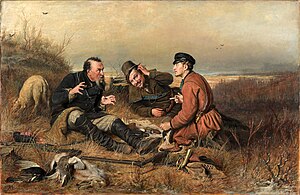
| The Hunters at Rest 1871 (Photo credit: Wikipedia) |
Survey: hunter numbers dropping
We had 11 hunters, including five kids, at our deer camp last year.
Sleeping arrangements were a bit complex, but we made it work. In the
moments before dawn, all 11 were up and dressed ready to venture out to
their posts to play an assigned role in the group hunt.
That’s hunting in Wisconsin -- steeped in tradition and family
values. There are hunting families and camps that have persisted for
generations. Others, like ours, can only claim a decade or two of fun
stories. If you only talk with hunting friends – in person or
electronically – it’s easy to get the feeling there will always be as
many hunters as there are today.
A look at statistics gives a different picture, however. The total
number of hunters the Wisconsin Department of Natural Resources reported
to the federal government has declined from 770,000 in 2000 to about
704,000 in 2010. A recent demographic analysis published in Population
and Environment predicts the number of resident male deer hunters will
decline by more than 25 percent in the next 18 years. The figures
predict an average decline of 1.6 percent per year with the drop off
accelerating in the later years.
Moreover, DNR surveys reveal the number of small game hunters has
declined by an average 2 percent per year for the past eleven years and
attendance at Hunter Education courses has dropped by an average of 2
percent per year since 2000.
The evidence indicates we are at the beginning of a long, steady
decline in number of hunters in Wisconsin. With more than 700,000 still
hunting in the Badger State, should we respond now? Yes.
Yes, because we still have a lot of hunters. And, hunters are the
only ones who will be able to ensure our future by mentoring new
hunters. Further, there’s no successful model to follow for recruiting
new hunters and hunter numbers are declining around the nation. We need
time to learn what works for hunter recruitment in the 21st century.
Efforts to slow the decline have been growing in popularity recently. Groups and partners around the state have offered the
Learn to Hunt
program where anyone 10 years old or older (including adults) can try
hunting with a mentor, without passing hunter education. In addition,
people participating in an organized Learn to Hunt event are not
required to have a hunting license. Licenses are required for youth
hunts and for mentored hunting outside of Learn to Hunt events. More
than 10,000 people have participated in a Learn to Hunt program around
the state since the first one occurred in 1997. Last year participation
increased by more than 10 percent -- a great sign.
Change is in the air as we continue to grow the hunter recruitment
and retention program. We are actively recruiting more and more adults
and families to learn to hunt events using the DNR website to open up
registration to anyone looking for an event. (Search keyword "
LTH" at dnr.wi.gov to find an event near you.) Streamlined access to
hunter education courses
will be made available for adults who are interested in starting up. We
can track the successful recruitment of a new hunter over time and
hopefully identify the factors that lead to lifelong interest. And,
finally, we are piloting a course designed to teach interested adults to
hunt and provide the first-time hunting experience at Madison College
this fall.
Now comes the hard part: Sacrifice is required to make a new hunter.
Maintaining our hunting heritage will only be successful if we all take
it on. We can all increase the focus on mentoring adults and families
into hunting. It takes time and commitment and I believe we have enough
of both. Stay tuned for more information on what you can do and how you
can be involved in protecting your hunting heritage.
FOR MORE INFORMATION CONTACT: Keith Warnke – 608-576-5243